Skip to content
TAPoR Text Analysis Portal for Research

Tools

Sort by Name ↑ Rating Date

Visualization

140kit

140kit provides a management layer for tweet collection and analysis. Raw data cannot be passed through to the users, but any analytical process can be run across your dataset, and the data is held for as long as the user wants. When new analytical processes are created, they can be run on existing sets of data. 140kit does not claim any control of the analysis, however it retains ownership of the data collected. Current limits: User: 20,000 Tweets per Dataset or until Dataset time elapses Academic User: 500,000 Tweets per Dataset or until Dataset time elapses

Rated 0.0 out of 5.

Collaboration

Academia.edu

Academia.edu is a social platform that allows academics to share research papers, gray literature, reviews and other scholarly materials. The site provides user statistics on the number and geographic origin of profile and document views. Academic affiliation is displayed in a tree-like format, grouped by universities and departments.

Rated 0.0 out of 5.

Capture

Aggregator - Other (TAPoRware)

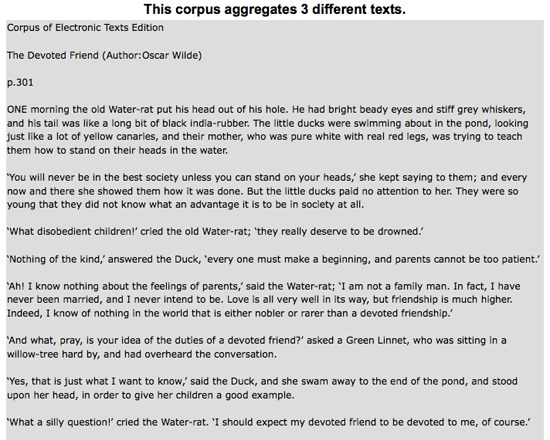
This tool aggregates texts/subtexts from different locations into a single text. The original texts can be from a user-specified web page or files located on one's computer. Aggregating subtexts requires all documents to share a common subtext tag, such as the <body> tag. The aggregator tool will grab the contents from the texts to form a single new text.

Rated 1.0 out of 5.

Search

Alveo

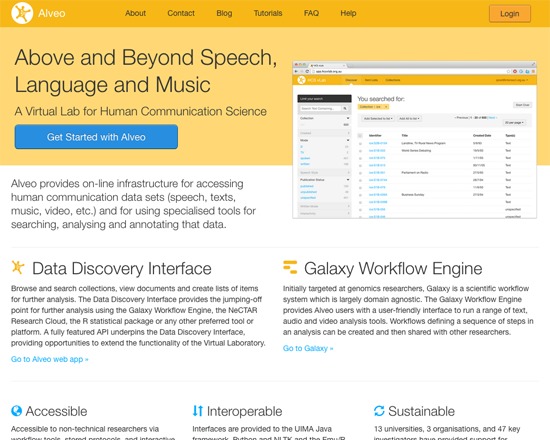
Alveo is a platform for data discovery and analysis focused on communication data such as speech, text or video. Developed by the University of Western Sydney, researchers can use the Alveo infrastructure to store data, create collections, develop workflows, and analyze datasets with Alveo's built-in tools. The tools available span multiple disciplines and include common functions such as tokenization and concordance, plus interfaces between Alveo and other common analysis tools such as Apache's UIMA for NLP, and with programming languages such as Python and Java. Users can segmented and recombined data from multiple collections into a new, focused dataset for close analysis. Collection creators can set their own license and access rights, and users of a collection must accept the creator's conditions in order to use data from it. User accounts are free, but must be requested from and approved by Alveo.

Rated 0.0 out of 5.

Content Analysis

AntWordProfiler

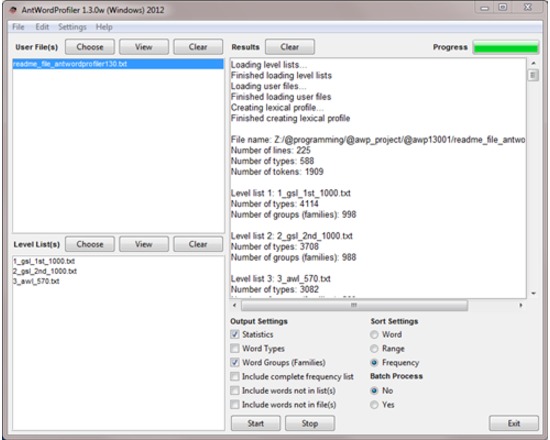
AntWordProfiler is free software for analyzing word frequency.

Rated 0.0 out of 5.

Publishing

Archive-It

Archive-It is a subscription web archiving service from the Internet Archive that helps organizations to harvest, build, and preserve collections of digital content. Through our user friendly web application Archive-It partners can collect, catalog, and manage their collections of archived content with 24/7 access and full text search available for their use as well as their patrons. Content is hosted and stored at the Internet Archive data centers.

Rated 0.0 out of 5.

Publishing

Artifex Press

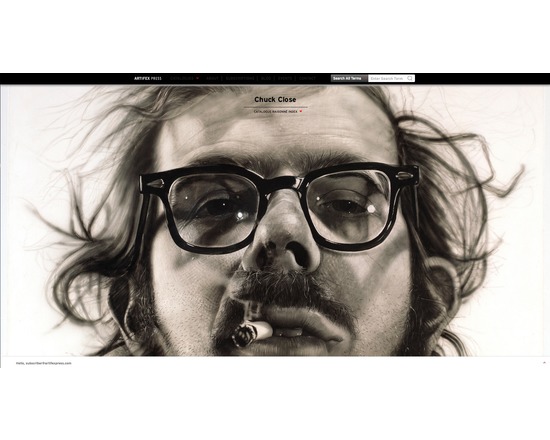
Artifex Press is a publishing and technology company that digitally publishes catalogues raisonnés, a comprehensive, annotated documentation of all of the known artworks by an artists. They have developed a proprietary, patented software platform and a dedicated publishing program in order to create digital catalogues raisonnés. They offer both their own digital catalogues raisonnés and the ability to licence the software to produce your own projects. Catalogues raisonnés have typically been published book but the information they contain is constantly in flux and printed versions are rarely complete and accurate for long. The online version produced by Artifex Press is more accessible, more flexible, more time- and cost-efficient, and above all, more accurate and up-to-date than the traditional printed counterpart.In addition to the digital publication, Artifex Press creates digital archives for all the artists with whom they work. The Artifex Press software is available for licensing, for catalogue raisonné projects run by outside organizations including artist studios, foundations, and estates. The company is open to new collaborations looking to preserve the legacy and intellectual property of artists and estates. Research & Archive Tool Digital content management: create links between artworks, publications, exhibitions, collectors, venues, institutions, and other relevant categories build artwork records with data files such as title, date, medium, dimensions, inscriptions, editions, provenance, condition, installation instructions, and comments store multiple images and private documents in each record Web-accessible: software is available anywhere with an internet connection Unlimited storage: there are no storage limits and performance of your catalogue is not affected by large data sets Attention to your needs: Software has been shaped by the feedback of multiple catalogue editors, researchers, and artist studio managers to determine the most useful, practical, and intuitive tools and features Compatibility: You can import existing databases and convert them to fit Artifex fields without losing information Publishing Tool Publish to a selected audience only: control your user group or make your content available to the public Publish while withholding confidential information: define public and archive only sections of your collection Flexible design: customize the look and feel of your catalogue including the homepage, artwork views and editorial pages Ease of navigation: design features have been rigorously tested to ensure ease of use Multimedia content: include any number of images, videos, audio clips, and other multimedia content Real-time accuracy & cataloguing: by updating provenance as well as exhibition and literature histories, you can maintain the accuracy of the content; you can also expand the catalogue to include newly discovered information and newly created artworks. Assistance: Artifex Press are available to make the editing and publishing process as easy as possible. For more information or to set up a live tour of the software and learn about their research & editorial servces contact: info@artifexpress.com

Rated 0.0 out of 5.

Publishing

AustESE (Australian Electronic Scholarly Editing)

AustESE (Australian Electronic Scholarly Editing) is a workbench environment for facilitating the prodiction of electronic scholarly editions. Its features include functions for text import, markup, collation, textual analysis, annotation and tagging.

Rated 0.0 out of 5.

Gathering

Bamboo Content Interoperability Hub

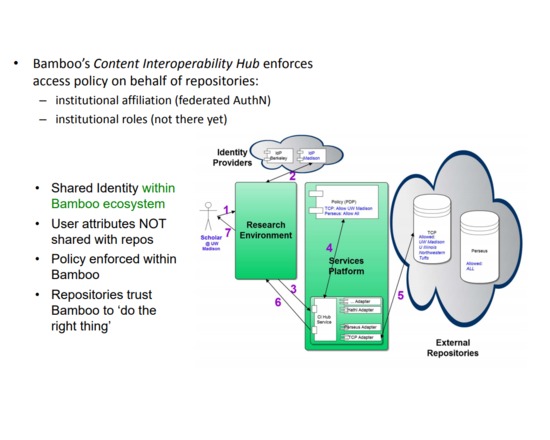
The Bamboo Content Interoperability Hub (CI gub) is an effort to largely automate the time-consuming process of downloading and compiling data from different repositories and archives and standardizing some of the format differences. When scholars browse the repositories whose content they want (and have rights to) use, they can bookmark it at the proper level of granularity in Zotero, and import those Zotero bookmarks into a workspace integrated with the CI hub. The CI hub then retrieves the data, and normalizes it to a certain extent so that data from different sources can be used together. The CI hub also offers a "preview" tool to see what data has been ingested, before that data is handed off to the environment where the scholar will use it. The CI hub currently has adaptors to draw data from TCP-EEBO/ECO, Hathi Trust, Perseus, and AustLit.

Rated 0.0 out of 5.

Capture

Beautiful Soup 4 Gathering URLs from a Web Page

This code uses Beautiful Soup 4 to gather all the URLs present on a web page (including the redirect and meta data) and saves them in a csv

Rated 0.0 out of 5.