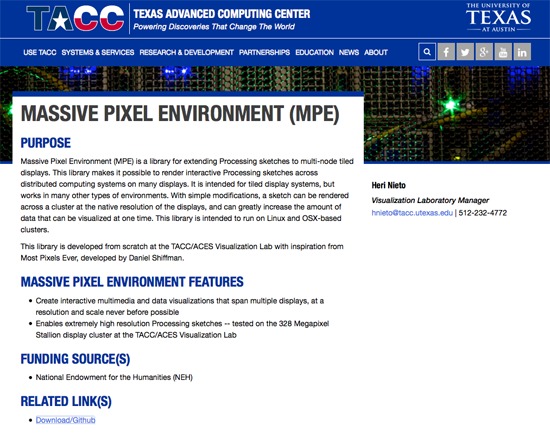
Massive Pixel Environment (formerly Most Pixels Ever: Cluster Edition) is a library from the Texas Advanced Computing Center's A Thousand Words Project, inspired by and expanding on the original Most Pixels Ever developed by Daniel Shiffman. It extends Processing sketches to multi-node tile displays, enabling users to display output across multiple systems and displays, at the native resolution of those displays. This allows for a dramatic increase in the amount of data that may be visualized at one time, in comparison to a single-screen display.
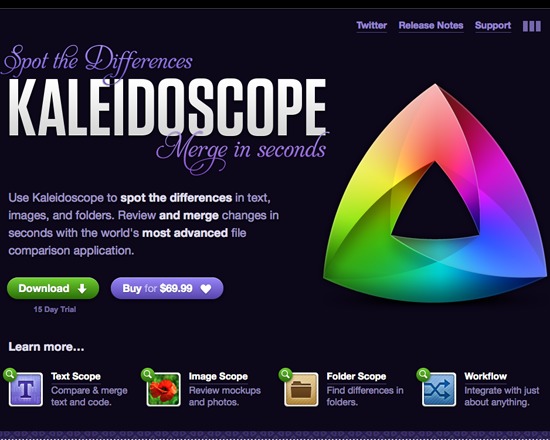
Kaleidoscope is a tool designed to assist users in spotting differences between versions of a text, source files or images. It allows direct comparison of images, texts to be merged into a single edition, and files to be differentiated.
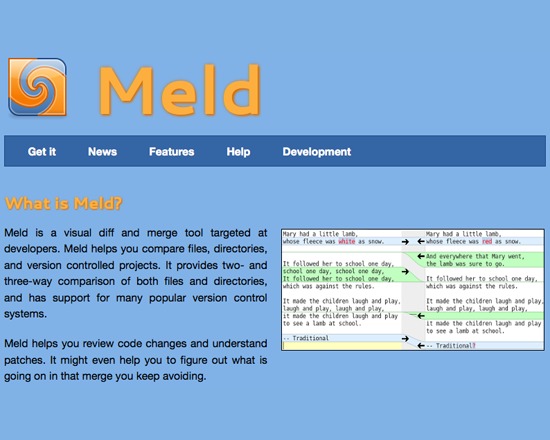
Meld is a free, open source tool for comparing files, directories and version-controlled projects developed in Python by Kai Willadsen. It features two- and three-way comparison of files and directories, supports numerous version control systems, and is particularly useful for reviewing changes to code. This tool can be downloaded or run without an install via the command line by copying the source code directly from the repository.
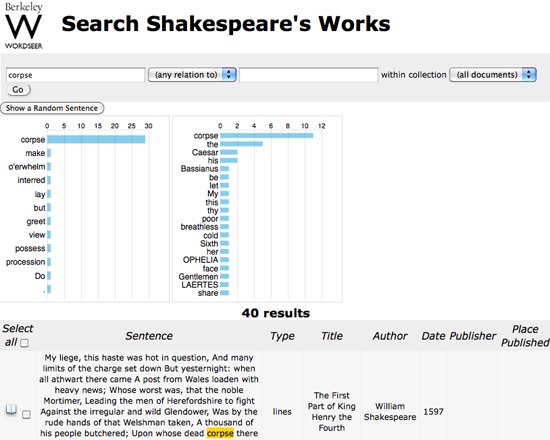
WordSeer is a free, simple to use text analysis tool offered by the University of California Berkeley. It is entirely web based, with tools for search, reading and interrogating, heat maps and frequency. At this time, the only corpus available for exploration is the works of William Shakespeare.
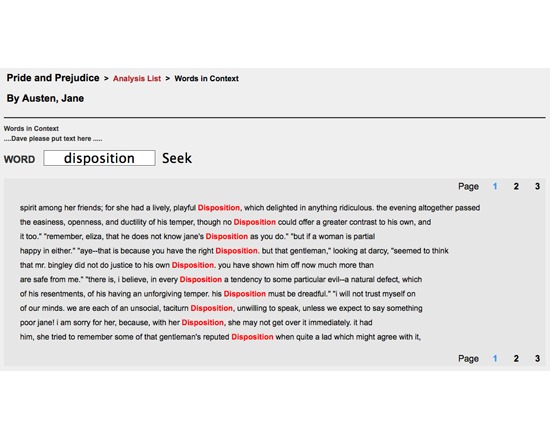
Words in Context, from the Visualizing Literature toolset, allows users to select a text from Visualizing Literature's list of grade school curriculum exemplar creative commons texts and perform a keyword search. The results of the search show all instances of the word, with all surrounding text found on the same line for context. All texts are searchable, and can be sorted by writer, title, publication year, grade level, availability for analysis and availablility of a direct link to the text. Please note that, as this toolset is still in beta, the selection of texts is currently limited, though over 300 texts are forthcoming. As of 2014, this toolset is no longer available as the website has been taken down. It may still be viewed via the Internet Archive.
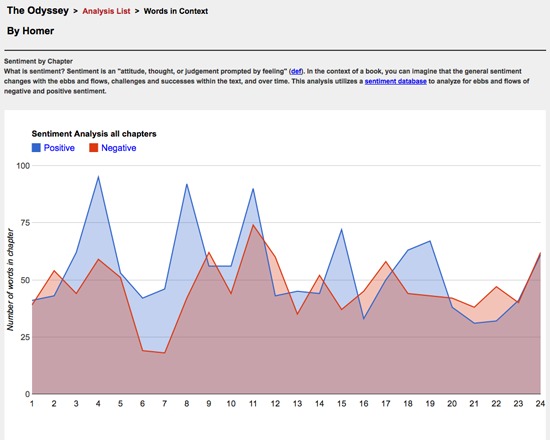
Sentiment, from the Visualizing Literature toolset, allows users to select a text from Visualizing Literature's list of grade school curriculum exemplar creative commons texts and graph it for keywords suggestive of sentiment. All texts are searchable, and can be sorted by writer, title, publication year, grade level, availability for analysis and availablility of a direct link to the text. Please note that, as this toolset is still in beta, the selection of texts is currently limited, though over 300 texts are forthcoming. As of 2014, this toolset is no longer available as the website has been taken down. It may still be viewed via the Internet Archive.
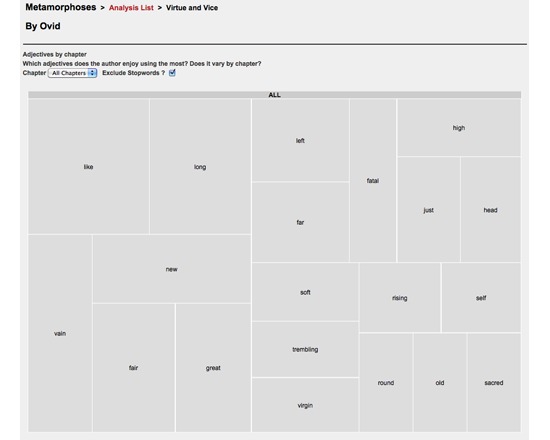
Adjectives in the Book, from the Visualizing Literature toolset, allows users to select a text from Visualizing Literature's list of grade school curriculum exemplar creative commons texts and visualize the most common adjectives within the text. Users can search the whole text or chapter by chapter, and incude or exclude stopwords in the results. All texts are searchable, and can be sorted by writer, title, publication year, grade level, availability for analysis and availablility of a direct link to the text. Please note that, as this toolset is still in beta, the selection of texts is currently limited, though over 300 texts are forthcoming. As of 2014, this toolset is no longer available as the website has been taken down. It may still be viewed via the Internet Archive.
Rated 0.0 out of 5.★★★★★0.0
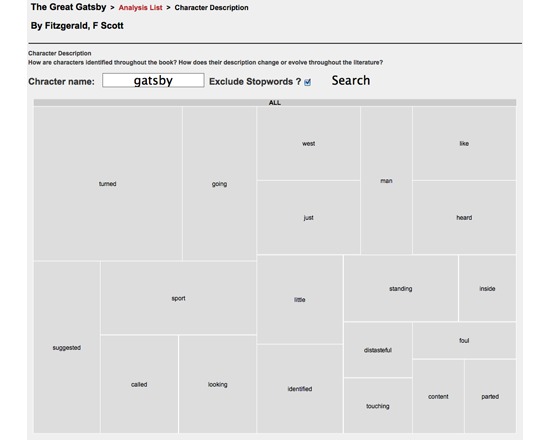
Visualizing Literature: Adjectives and Character (Treemap)
Adjectives and Character (Treemap), from the Visualizing Literature toolset, allows users to select a text from Visualizing Literature's list of grade school curriculum exemplar creative commons texts and search for a character name from the text. The results visualize the most common adjectives associated with that character, and may include or exclude stopwords. All texts are searchable, and can be sorted by writer, title, publication year, grade level, availability for analysis and availablility of a direct link to the text. Please note that, as this toolset is still in beta, the selection of texts is currently limited, though over 300 texts are forthcoming. As of 2014, this toolset is no longer available as the website has been taken down. It may still be viewed via the Internet Archive.
Juxta is a free, open source tool for comparing and collating texts, originally intended for comparing multiple versions of the same text. It offers several views and visualization options, including histograms and side by side comparison. Juxta is available as both a desktop application and as a web service that can be integrated into the user's own website.
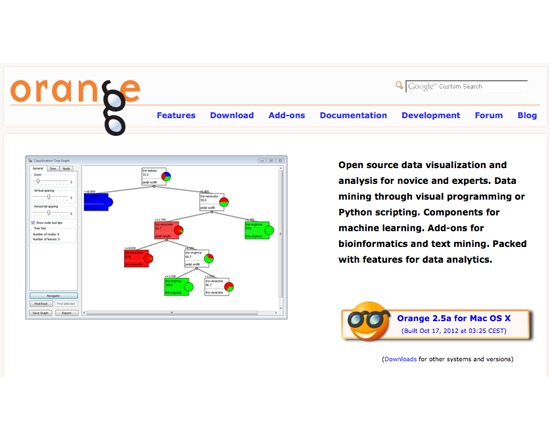
Orange is a free, open source data visualization and analysis tool. It allows users to conduct data mining either through its visual programming language, or via Python scripts, and includes components for machine learning. Orange includes both add-ons for biometrics and text mining, and data analytic features.