Skip to content
TAPoR Text Analysis Portal for Research

Tools

Sort by Name ↑ Rating Date

Collaboration

Google+

Social networking platform, not unlike Facebook, that works with other Google services and allows users to connect with and see what friends are doing. Users can create posts and share links or multimedia items with select groups (called Circles). The Hangouts feature allows group video chat.

Rated 0.0 out of 5.

Search

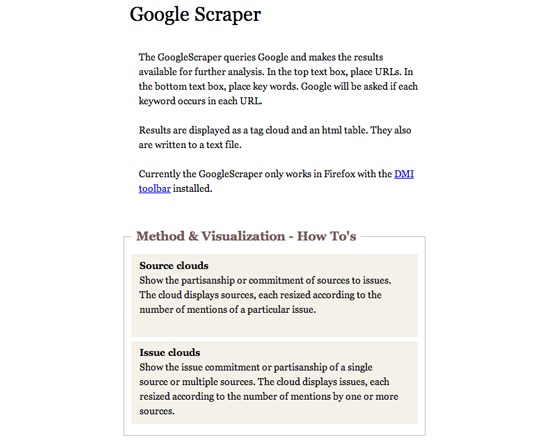
Googlescraper (Lippmannian Device)

Googlescraper (Lippmannian Device) is a free, web-based tool for querying Google and saving the results for analysis. It allow users to specify URLs, keywords, and which keywords apply to each URL. The tool outputs as HTML, a tag cloud, and a text file. The tool must be used with FireFox, and requires users to first install the DMI toolbar , which permits the tool to work around Google's block against automated requests.

Rated 0.0 out of 5.

Visualization

GPS Visualizer

GPS Visualizer is a free, easy-to-use online utility that creates maps and profiles from GPS data.

Rated 0.0 out of 5.

Visualization

Graphing Twitter Data

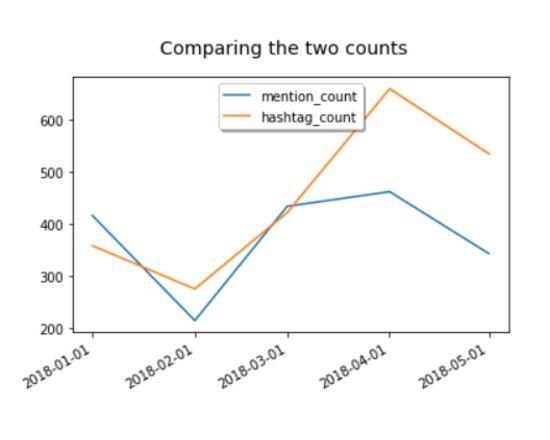
TATR: Graphing This notebook is part of a greater series of Juypter Notebook structured around Twitter Tweet analysis. This particular notebook will look at graphing. From saving the resulting graph to organization. This notebook will provide the a framework that can be expanded to suit your needs.

Rated 0.0 out of 5.

Visualization

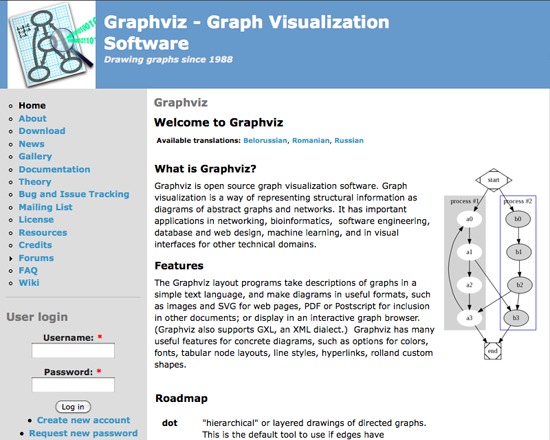
Graphviz

Graphviz is a free, open source graph visualization tool in constant development since 1988. It represents structural information as diagrams of abstract graphs and networks.

Rated 0.0 out of 5.

Modeling

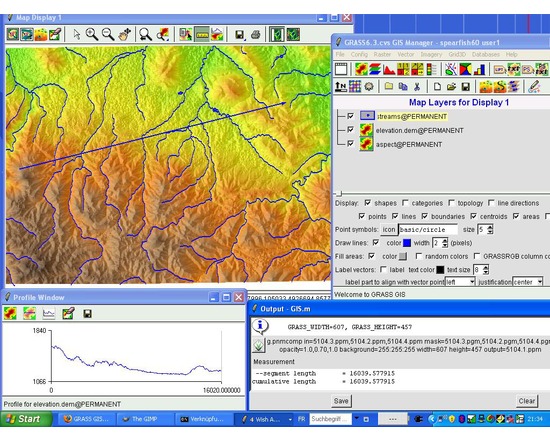
GRASS GIS

GRASS GIS is free and open source software used for geospatial data management and analysis, image processing, graphics/maps production, spatial modeling, and visualization. GRASS is currently used in academic and commercial settings around the world, as well as by many governmental agencies and environmental consulting companies. Comparison to QGIS: Like GRASS, QGIS is free, open source, developed by volunteers, and has a robust and active online user community. However, GRASS is mainly used for highly technical purposes and mathematical analyses. For more details, see this Stack Exchange thread. QGIS and GRASS do cooperate with each other; Plug-ins and extensions allow GRASS functions to be used inside QGIS.

Rated 0.0 out of 5.

Annotating

Greenshot

Windows tool for annotating, editing, and sharing screen shots and images.

Rated 0.0 out of 5.

Publishing

Greenstone

Greenstone is a suite of software for building and distributing digital library collections. It also allows users to publish to the internet or CD-ROM. Software interface and documentation available in English, French, Spanish, Russian, and Kazakh.

Rated 0.0 out of 5.

Analysis

GRETL

GRETL () s a cross-platform software package for econometric analysis, written in C. It features: Easy intuitive interface (now in French, Italian, Spanish, Polish, German, Basque, Portuguese, Russian, Turkish, Czech, Traditional Chinese, Albanian and Greek as well as English) A wide variety of estimators: least squares, maximum likelihood, GMM; single-equation and system methods Time series methods: ARMA, GARCH, VARs and VECMs, unit-root and cointegration tests, etc. Limited dependent variables: logit, probit, tobit, interval regression, models for count and duration data, etc. Output models as LaTeX files, in tabular or equation format Integrated scripting language: enter commands either via the gui or via script Command loop structure for Monte Carlo simulations and iterative estimation procedures GUI controller for fine-tuning Gnuplot graphs Links to GNU R, GNU Octave and Ox for further data analysis

Rated 0.0 out of 5.

Search

GRIPHOS (General Retrieval and Information Processor for Humanities Oriented Studies)

GRIPHOS (General Retrieval and Information Processor for Humanities Oriented Studies) is a historically important suite of programs used extensively within the Museum Computer Network, a shared information management system developed jointly by fifteen New York area museums. Designed by Dr. Jack Heller of New York University's Institute for Computer Research in the Humanities (ICRH) and debuting in 1967, GRIPHOS enabled museums to store, retrieve and apply textual markup to their records.

Rated 0.0 out of 5.