Skip to content
TAPoR Text Analysis Portal for Research

Tools

Sort by Name Rating ↑ Date

Collaboration

NowComment

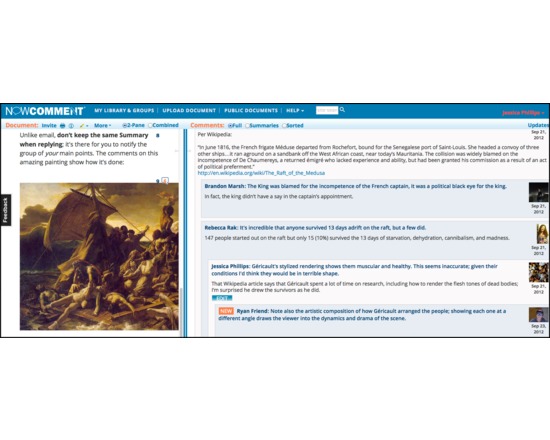
NowComment makes it easy to have rich, engaging discussions of online documents no matter how large (or small) your class or collaboration group. It's fast, powerful, and feature-rich: you can sort comments, skim summaries, create assignments, hide comments, highlight with multiple colors and meanings, and much more. Integrates to any LMS via LTI. Used in universities and K12 schools for the past 6 years.

Rated 0.0 out of 5.

Cisdem PDFConverterOCR for Mac

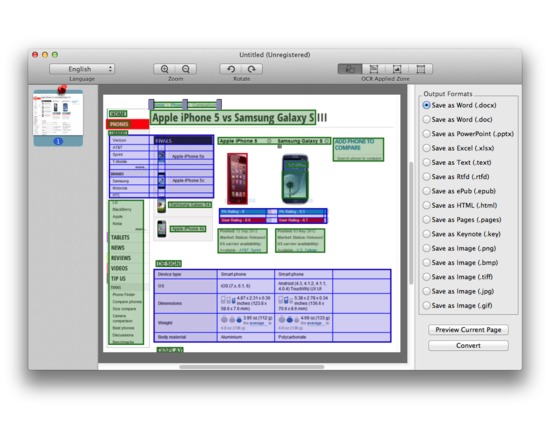
A tool to convert Normal/Scanned PDF and Image to Word, Excel, PPT, Keynote, Pages, Text, etc. on Mac. Features: Convert PDF to Word (.doc), Excel (.xlsx), and More Common Office Format Files Convert PDF to Pages and Keynote Convert PDF to Graphics Files Convert Scanned PDF with Accurate OCR Convert Multilingual PDF Files Support Password-Restricted PDF Files Extract Portions of Text, Image or Table for Reconstruction of Document

Rated 0.0 out of 5.

Web development

Pixlr online photo editor

This is a free to use online image editor with a fair amount of features. I use this primarily for quick editing jobs such as resizing and cropping small images. The online editor will load images from your computer or via url which is incredibly handy. There is a firefox plug-in available too which makes the time it takes to view an image, edit, and save it, a fast process. The source code for the application is closed, but the dev team does offer a free API. Pixlr also has tools for mobile devices, one of which is paid app for $1.

Rated 0.0 out of 5.

Visualization

HT-Bookworm

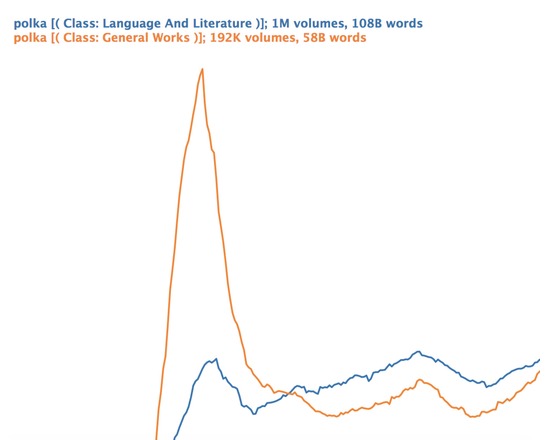
Bookworm is a tool that visualizes language usage trends in repositories of digitized texts in a simple and powerful way. It is a tool for culturomic exploration through the observation of chronological trends for words and phrases in large digitized collections of textual documents with metadata facets. The world's great research libraries have, over time, carefully assembled a rich body of metadata pertaining to the books in their collections. Since the HTRC has access to volume-level metadata as well as volume-level content, we have constructed a Bookworm of the HathiTrust Non-Google-digitized public domain (NGPD) corpus. We felt that setting up Bookworm with a HathiTrust corpus would provides scholarly researchers with the means of exploring trends. This tool enables scholars to discover new textual use patterns across the entire corpus. In the future, we plan to ingest the entire HathiTrust corpus and continue to identify appropriate metadata to use for the faceted browsing. This tool will be particularly useful to scholars interested in books that are still under copyright - which is the case for most books published after 1923. Although these books will not be available for reading or downloading online, working with individual words and phrases and tracking their occurrences through time will be useful to academic researchers, especially historians, sociologists and literary scholars. John Unsworth has noted that a fundamental goal of the humanities is appreciation: "by paying attention to an object of interest, we can explore it, find new dimensions within it, notice things about it that have never been noticed before, and increase its value" (2004). Shifting from traditional close reading to a large-scale view of text presents a profound discomfort for humanities scholars, due to the difficulty in retaining the same sensitivity to what is actually contained in the works being studied. HTRC-Bookworm will function as a link between quantitative analysis (distant reading) and close reading. According to Frederick Gibbs and Daniel Cohen, "any robust digital research methodology must allow the scholar to move easily between distant and close reading, between the bird's eye view and the ground level of the texts themselves" (2011). This is what HTRC-Bookworm intends to accomplish (within the limitations of applicable copyright laws.) Current limitations and future improvements: The current instantiation (the alpha version) of the HTRC-Bookworm is set up to work with only 250,000 out-of-copyright volumes from the HathiTrust NGPD corpus. Overall the HathiTrust has more than 11,000,000 volumes in all their corpus, consisting of 420 billion pages. As a demonstration we have selected some metadata for use with this smaller corpus, but we are open to feedback on improvements to this metadata. Our plan is to ingest the larger HathiTrust corpus and to allow facets to be selected based on HTRC worksets.

Rated 0.0 out of 5.

Visualization

Gerbil

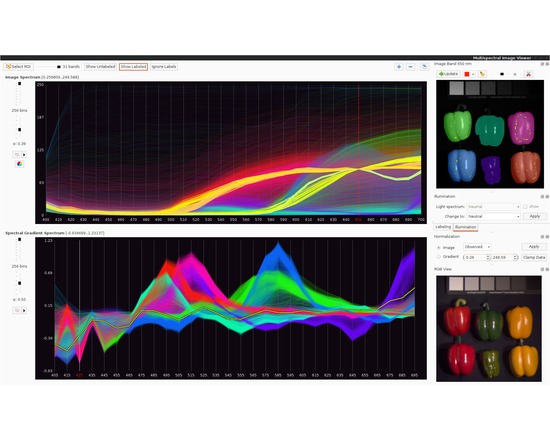
Gerbil is a generic framework for visualization and analysis of multispectral and hyperspectral data that strives to both bring new innovations in analysis capabilities and be of use in a wide range of hyperspectral data applications. In a nutshell, Gerbil lets you… explore a multispectral or hyperspectral image before processing it, apply common computer vision algorithms adapted to hyperspectral data, cluster and label image pixels for your application scenario, assess your own algorithms via high-dimensional data visualization, use an intuitive interface for teaching multispectral imaging and reflectance analysis. One example application for Gerbil is finding hidden information in multispectral scans of old manuscripts or art pieces.

Rated 0.0 out of 5.

BibSonomy

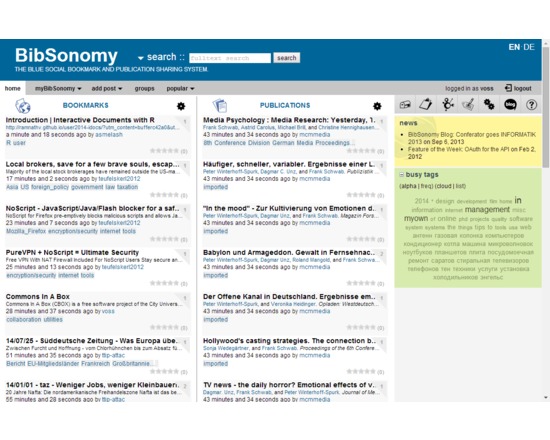
BibSonomy is a social bookmarking and publication-sharing system. It aims to integrate the features of bookmarking systems as well as team-oriented publication management. BibSonomy offers users the ability to store and organize their bookmarks and publication entries and supports the integration of different communities and people by offering a social platform for literature exchange. Both bookmarks and publication entries can be tagged to help structure and re-find information. As the descriptive terms can be freely chosen, the assignment of tags from different users creates a spontaneous, uncontrolled vocabulary: a folksonomy. In BibSonomy, the folksonomy evolves from the participation of research groups, learning communities and individual users, organizing their information needs. Publication posts in BibSonomy are stored in the BibTeX format. Export in other formats such as EndNote or HTML (e. g. for publication list creation) is possible. The service was developed by a team of students and scientists working at the Institute of Knowledge and Data Engineering and is hosted by the University of Kassel in Germany. [Description taken from the Wikipedia article about BiBSonomy]

Rated 0.0 out of 5.

Publishing

Smallpdf- Online PDF Tools

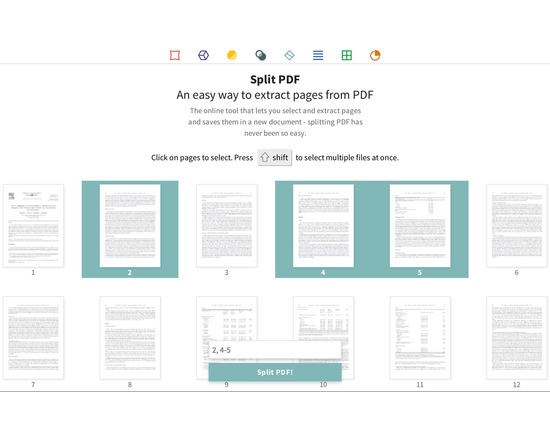
Smallpdf is a free online tool to compress, merge, split and convert PDF documents. It is simple to use and free to use. It can be useful to compress research papers, merge several documents together or extract graphs and images from PDF files.

Rated 0.0 out of 5.

Web development

ManageWP

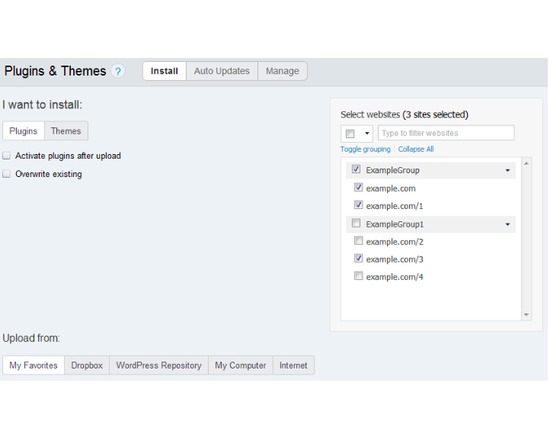
ManageWP is a free/paid service used to manage multiple WordPress instances across multiple servers. It provides dashboard monitoring of performance as well as batch updating and management of themes, plugins, comments, etc. It provides facility for syndication of material across multiple sites as well as aggregated analytics and cloning of WordPress instances.

Rated 0.0 out of 5.

Visualization

TRAViz

One of the substantial tasks in the field of textual criticism is called collation, which is the cautious comparison of various editions of one and the same text. The traditional approach of a humanities scholar is to put the texts of several editions next to each other and mark the differences among the textual entities (e.g., sentences, sections, chapters). Since this is an extremely laborious approach many Digital Humanities projects investigate tools that support the humanities scholars with computational methods. TRAViz is a JavaScript library that was developed within the Digital Humanities project eTRACES. It generates visualizations for Text Variant Graphs that show the variations between different editions of texts. TRAViz supports the collation task by providing methods to: - align various editions of a text - visualize the alignment - improve the readability for Text Variant Graphs compared to other approaches - interact with the graph to discover how individual editions disseminate

Rated 0.0 out of 5.

Visualization

GeoTemCo

The amount of online data annotated with geospatial and temporal metadata has grown rapidly in the recent years. Providers like Flickr and Twitter are popular, but hard to browse. Many systems exist that, in multiple linked views, show the data under geospatial, temporal, and topical aspects. GeoTemCo is a web-application which easily can be utilized to visualize such kind of data, and furthermore, it allows the comparative analysis of several datasets. GeoTemCo consists of several views showing the datas' several dimensions: a map view for the geospatial distribution of items, a time view for the temporal distribution of items and a detail view for the inspection of individual items. A broad range of interaction abilities allows for explorative comparison and analysis of different datasets representing different topics. GeoTemCo focuses on supporting the user to: - analyze and compare temporal trends - analyze and compare geospatial distributions - detect cooccurences between data items of different datasets - compare geospatial migrations of topics over time - find causalities between different datasets

Rated 0.0 out of 5.