Skip to content
TAPoR Text Analysis Portal for Research

Tools

Sort by Name Rating Date ↓

Visualization

Pattern

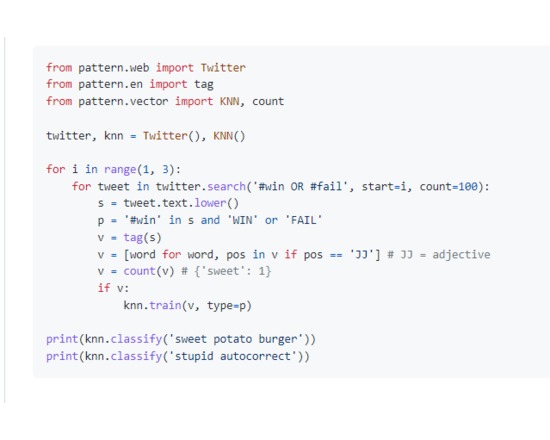
Pattern is a web mining module for Python. It has tools for: Data Mining: web services (Google, Twitter, Wikipedia), web crawler, HTML DOM parser Natural Language Processing: part-of-speech taggers, n-gram search, sentiment analysis, WordNet Machine Learning: vector space model, clustering, classification (KNN, SVM, Perceptron) Network Analysis: graph centrality and visualization. It is well documented, thoroughly tested with 350+ unit tests and comes bundled with 50+ examples. The source code is licensed under BSD.

Rated 0.0 out of 5.

Publishing

iShowU

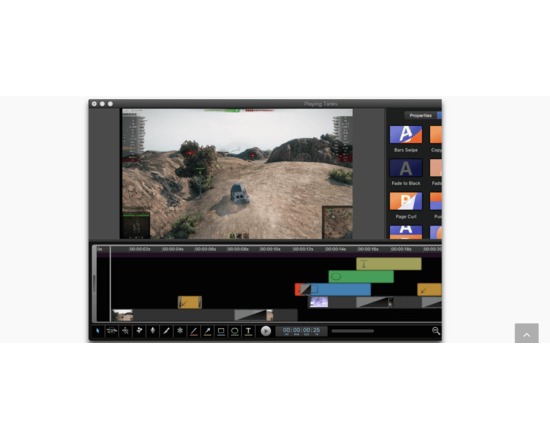
iShowU is publishing and recording software for Mac. It enables you to record audio and video on your screen, capture full screen shots, and program recording settings. iShowU is no longer supported as of early 2018.

Rated 0.0 out of 5.

Collation Works

CollateX-based text collation client. CollateX, run on an server independent from the URL above, is a powerful, fully automatic, baseless text collation engine for multiple witnesses. A second collation technique, ncritic, provides a slightly different baseless text collation. Each engine complements each other nicely. The user can use different files, even URLs, then output the result in GraphML, TEI, JSON, HTML, or SVG. Fuzzy matching is an option.

Rated 0.0 out of 5.

digilib

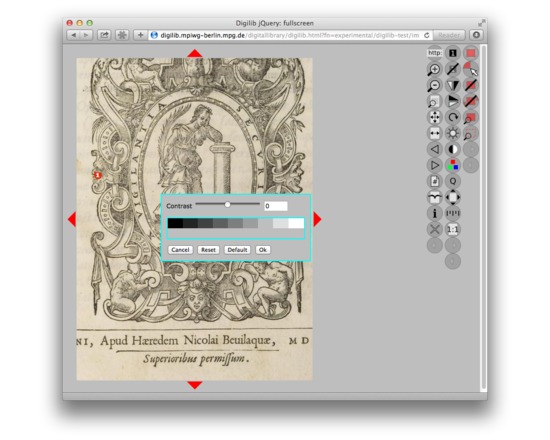
Digilib is a web based client/server technology for images. The image content is processed on-the-fly by a Java Servlet on the server side so that only the visible portion of the image is sent to the web browser on the client side. It supports a wide range of image formats and viewing options on the server side while only requiring an internet browser with javascript and a low bandwidth internet connection on the client side. digilib enables very detailed work on an image as required by scientists with elaborate zoom features like an option to show images on the screen in their original size. digilib facilitates cooperation of scientists over the internet and novel uses of source material by image annotations and stable references that can be embedded in URLs. digilib is used in the ALCATRAZ framework of image, text and annotation tools and many other projects.

Rated 0.0 out of 5.

Organizing

Bookends

Reference management entails the collection, annotation, curation, and citation of published information. Bookends simplifies these tasks. Bookends can perform Internet searches to retrieve references and associated pdfs or web pages, or immediately find and import references for which you already have the pdf. Versatile groups (static, smart, and virtual), term lists (keywords, authors, etc.), reference cross-linking (links), multiple notecards per reference, PDF annotation, tag clouds, and instantaneous live searches help organize and find information in your personal collection. Highly configurable displays let you view the reference information and attachments the way you want. Scan your word processor manuscripts to create publication-ready documents complete with bibliographies and footnotes. Sync references and pdfs in your library with your iPhone, iPod Touch, or iPad (requires separate purchase of Bookends On Tap from the iTunes App Store). Create and edit PDF annotations and highlighted text, which instantly appear as Bookends notecards. And much more. Compatible with Microsoft Word, Mellel (including Live Bibliography, updating of citations and bibliographies as you type), Apple Pages '08, ’09, and (provisionally) Pages 5, Nisus Writer Pro, and OpenOffice 3.

Rated 0.0 out of 5.

Organizing

Bibus

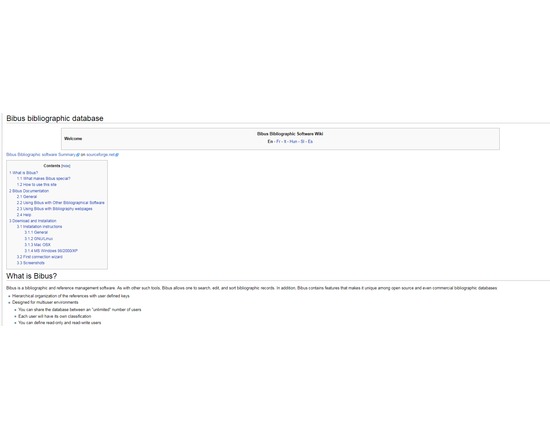
Bibus is a bibliographic and reference management software. As with other such tools, Bibus allows one to search, edit, and sort bibliographic records. In addition, Bibus contains features that makes it unique among open source and even commercial bibliographic databases: Hierarchical organization of the references with user defined keys Designed for multiuser environments Database sharing among an "unlimited" number of users Individual classification for each user Ability to define read-only and read-write users Live queries; that is searches that update as the database changes Online PubMed queries Online eTBLAST queries Insertion of references and formatting of bibliographies into three widely used Word Processors (LibreOffice.org,OpenOffice.org and Microsoft Word) Foreign language support through Unicode and gettext. As of version 1.4, Bibus is available in English, Chinese, Czech, French, German, Hungarian, Portuguese, Slovenian, Spanish.

Rated 0.0 out of 5.

Organizing

BibMe

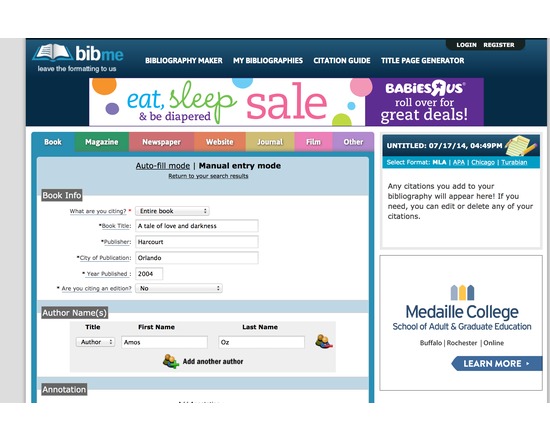
BibMe is an automatic bibliography maker that auto-fills information, allowing you to build easily a works cited page. You can download your bibliography in either MLA, APA, Chicago, or Turbian formats.

Rated 0.0 out of 5.

Organizing

BibDesk

Use BibDesk to edit and manage your bibliography. It will keep track of both the bibliographic information and the associated files or web links for you. BibDesk’s services will simplify using your bibliography in other applications and are particularly well suited for LATEX users.

Rated 0.0 out of 5.

Capture

Wink

Wink is a tutorial and presentation creation software, that allows you to create tutorials on how to use software, by capturing screenshots, mouse movements, and accompanying audio.

Rated 0.0 out of 5.

Annotating

WebSlides by Diigo

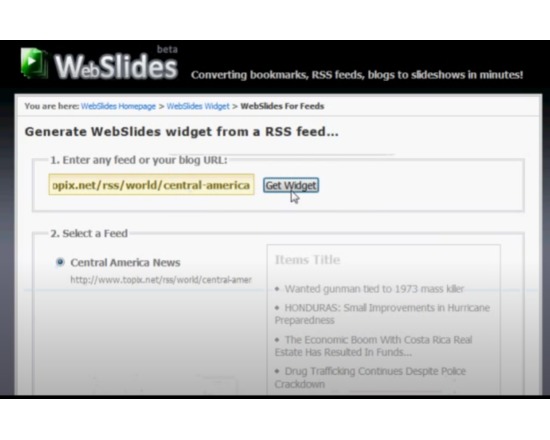
WebSlides allows you to convert your bookmarks and feeds to present them as live web pages in an interactive slideshow. Each WebSlide has a unique URL, or comes as a widget. Users may create a guided tour of any website, group course information for students, provide a simple tutorial on any subject, or share images on the web. Additionally, content publishers may use this presentation format for repacking and remixing content.

Rated 0.0 out of 5.