Skip to content
TAPoR Text Analysis Portal for Research

Tools

Sort by Name Rating Date ↓

Publishing

SARIT

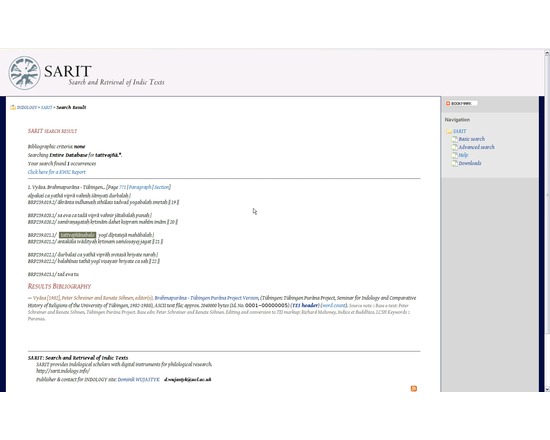
SARIT (Search and Retrieval of Indic Texts) is a collection of electronic editions of Sanskrit and other Indian-language texts that have dated and embedded notes about their change history. You can perform a text search, retrieval and analysis of works in SARIT, as well as download all the texts and convert them to PDF, HTML, etc.
Rated 0.0 out of 5.

Visualization

IBM Many Eyes

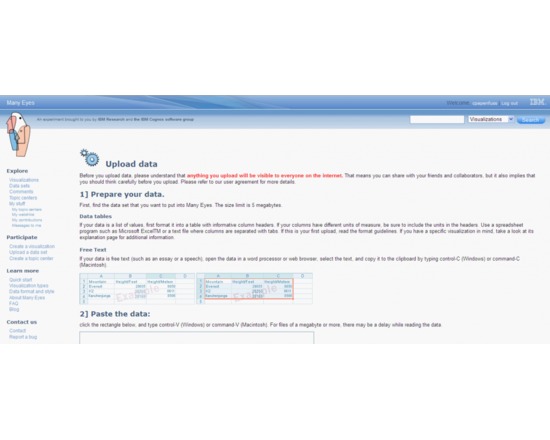
A variety of visualisation tools are available for use with existing datasets, or upload your own. This is part of IBM's Collaborative User Experience (CUE) research lab. The software is available Web2.0style at no charge, just upload your data set, and choose one of 16 different presentation styles.

Rated 0.0 out of 5.

Zoomify

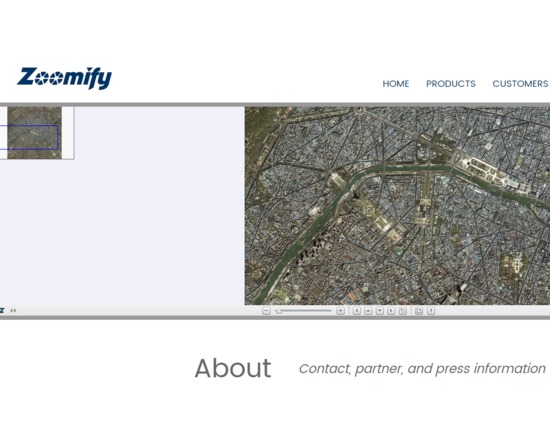
A suite of products developed for web designers that may be used to convert large images into a form that can be zoomed and panned. Zoomify enables large images to be viewed and manipulated, without an increase in server load or download time. It converts large images stored in raster formats (e.g. TIFF, JPEG) into a set of pieces or 'tiles' The individual pieces contain sub-sections of the image at different resolutions or levels of zoom, which are combined to create a type of mosaic. Features: Enables access to high quality still images without an increase in server load

Rated 0.0 out of 5.

BBEdit

A text editor designed for use by software developers and web designers to edit, search, and manipulate text. BBEdit provides native support for several programming and scripting languages. Third party custom modules are available, created by users, to handle languages that are not supported in the native application. Features: Multi-file text searching Scripting Syntax highlighting for ANSI C, C++, CSS, Fortran (through Fortran 95), HTML, Java, JavaScript, JSP, Object Pascal, Objective-C, Objective-C++, Perl, PHP, Python, Rez, Ruby, Setext, SQL, Tcl, Tex, UNIX shell scripts, XML and YAML

Rated 0.0 out of 5.

Uncategorized

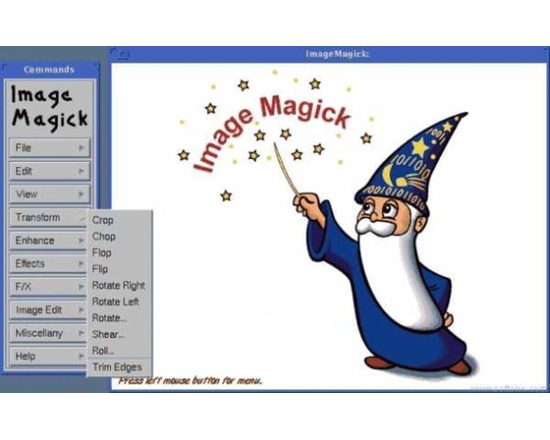
ImageMagik

A software suite for displaying, converting and editing still images stored in a raster image format. Image manipulation may be performed via the command line, API libraries, or through a simply graphical user interface. With recent development, it can now be used to store images in over 200 different image formats. Features: Software control through API and command line Format conversion Image transformation Transparency support Format identification Text to image conversion Read, process, or write mega-, giga-, or tera-pixel image sizes Distributed pixel cache Perceptual hash

Rated 0.0 out of 5.

Storage

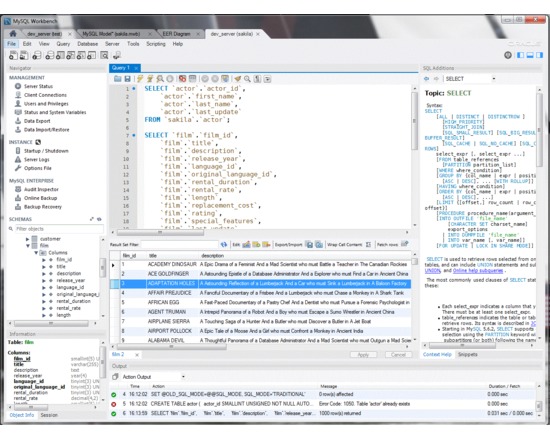
MySQL

A software application that enables relational databases to be created, managed and queried. The database management system enables multiple users to access a database through an appropriate interface. As an open source tool, MySQL underpins a number of free software projects, such as WordPress, phpBB and other software built on a LAMP infrastructure. Although widely used, there are a number of performance issues that limit its use in some environments. For example, it is unable to use multiple CPU cores to process a single query, potentially limiting its use as a data warehouse. Features: X/Open XA distributed transaction processing (DTP) support Connector/ODBC enables connection to a MySQL server using the Open Database Connectivity (ODBC) API Connector/NET enables developers to create .NET applications that use data stored in a MySQL database

Rated 0.0 out of 5.

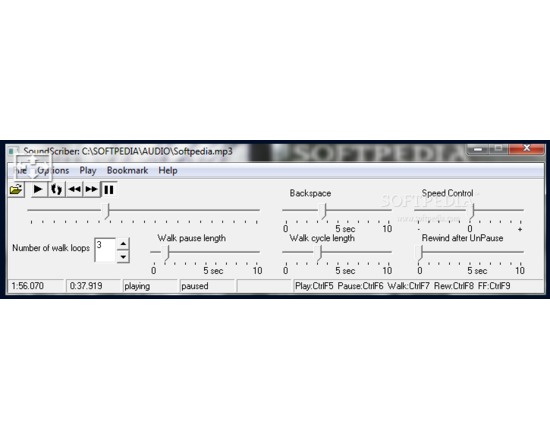
SoundScriber

A software application for the playback of audio recordings. SoundScriber offers specific functionality for researchers that wish to transcribe a recording. It was originally developed for use in the Michigan Corpus of Academic Spoken English (MICASE) project and released for use by academics performing similar work. Features: Audio playback via installed audio codecs (e.g. Wav, MP3) Variable speed playback 'Walking' support – playback of a small stretch of an audio stream several times to ensure accurate transcription is made, followed by an advancement to a new section of audio.

Rated 0.0 out of 5.

Publishing

Fedora Commons

Fedora (Flexible Extensible Digital Object Repository Architecture) was originally developed by researchers at Cornell University as an architecture to store, manage, and access digital content in the form of digital objects. Fedora defines a set of abstractions for expressing digital objects, asserting relationships among digital objects, and linking behaviors to digital objects. Developed by the community and stewarded by Duraspace — a nonprofit involved with open source technology projects including VIVO and DSpace — Fedora Commons implements the Fedora abstractions in an open source, modular repository system for managing and disseminating digital content. Fedora Commons is widely used in the academic sector as a basis for digital libraries, archives, or repository systems. Its worldwide installed user base includes academic and cultural heritage organizations, universities, research institutions, university libraries, national libraries, government agencies, and more. Management and maintenance of any digital content type and of metadata about content in any format Scale to millions of objects Access data via APIs (REST/SOAP) Provide RDF search (SPARQL) Rebuilder utility (for disaster recovery and data migration) Entire repository can be rebuilt from the digital object and content files Content model architecture (define "types" of objects by their content) Many storage options (database and file systems) JMS messaging (your apps can "listen" to repository events) Web-based administrator GUI (low-level object editing) OAI-PMH provider service GSearch (fulltext) search service Multiple, customer driven front-ends

Rated 0.0 out of 5.

OmniPage

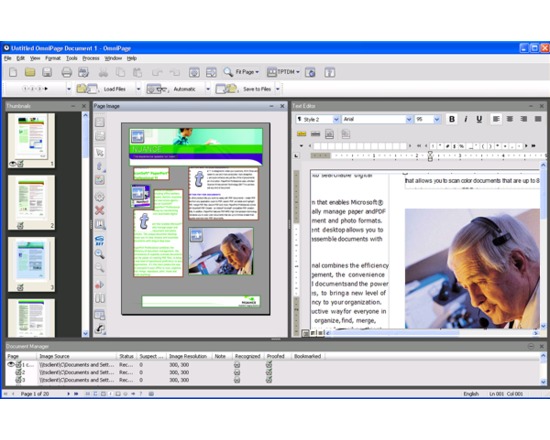
A software tool capable of performing Optical Character Recognition (OCR) upon a set of images. It was one of the first OCR recognition software to be developed. It was developed in the late 1980s and sold by Caere Corporation. It is currently owned by Kofax Inc. It achieves the task by analysing pixel sets and in an image and cross-matching them to a dictionary of words. Omnipage automates large sections of the digitisation process enabling physical objects to be scanned, processed using the OCR software and exported to a document file format. Later versions of the software incorporate image enhancement features to improve scan quality (and recognition results) and better support for complex page layouts and forms. Features: Integration with scanning software Maintain layout of captured document

Rated 0.0 out of 5.

Organizing

Adobe Bridge

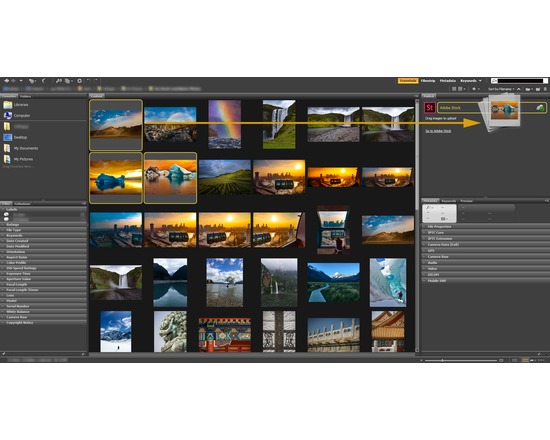
Adobe Bridge is a media management application used for organizing, browsing, locating, and viewing creative assets. It was provided as a part of the Adobe Creative Suite, beginning with CS2, and is now in version CS5 Features: Tightly integrated with other Adobe suite software (except for the standalone version of Adobe Acrobat 8) Extensible through use of Javascript

Rated 0.0 out of 5.