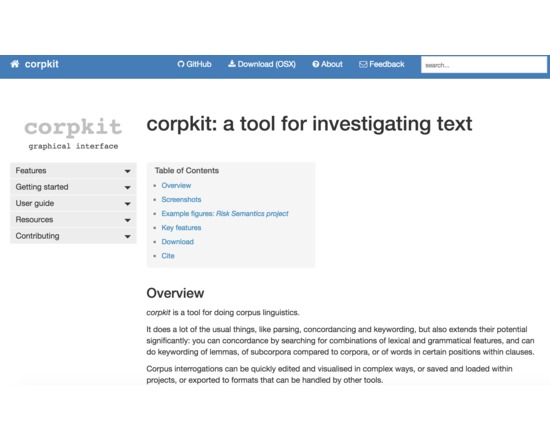
corpkit is a tool for doing corpus linguistics. It does a lot of the usual things, like parsing, concordancing and keywording, but also extends their potential significantly: you can concordance by searching for combinations of lexical and grammatical features, and can do keywording of lemmas, of subcorpora compared to corpora, or of words in certain positions within clauses. Corpus interrogations can be quickly edited and visualised in complex ways, or saved and loaded within projects, or exported to formats that can be handled by other tools. corpkit accomplishes all of this by leveraging a number of sophisticated programming libraries, including pandas, matplotlib, scipy, Tkinter, tkintertable and Stanford CoreNLP.
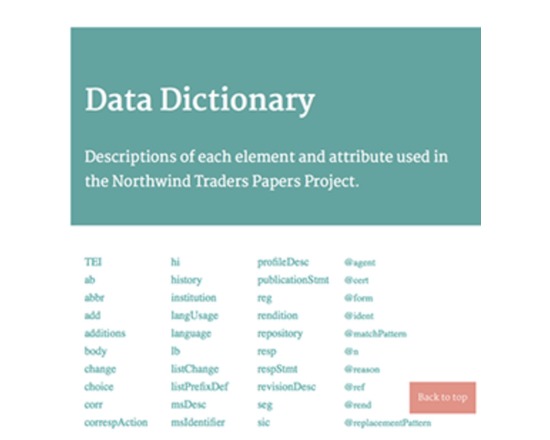
Aimed at the TEI editing community and intended to be run inside oXygen, the Data Dictionary Generator (DDG) generates profiles of every element and attribute appearing in a TEI file. Each entry includes a definition from the TEI Guidelines, a local, project-specific definition (if provided), and a brief snapshot of how the element or attribute is actually being used. By making it easy to compare these three things, the DDG aims to help project editors reflect on current practice within their projects and quickly create stronger encoding guidelines for their collaborators.
Lucidpress is a free online editor for making pamphlets, brochures, flyers, magazines, and more. Features include real-time collaboration, digital publishing, and easy sharing, all of which come in an intuitive, drag-and-drop interface. Upgrade to a professional account for increased storage space and access to additional templates.
Paperpile is a web-based commercial reference management software with special emphasis on integration with Google Docs and Google Scholar. It imports data from academic publisher websites and from databases such as PubMed, Google Scholar, Google Books, and arXiv. Paperpile can retrieve and store publication PDF files to the user's Google Drive account.
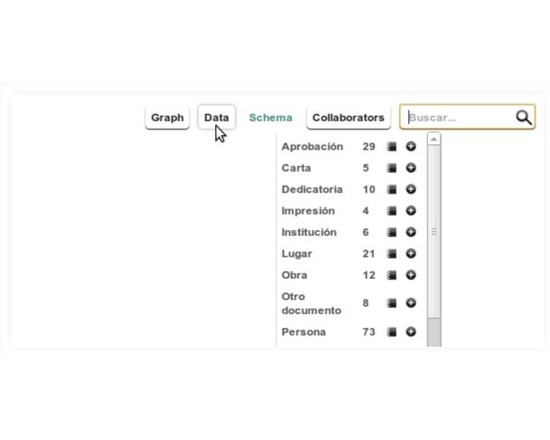
SylvaDB is a graph database management system. It allows users with no knowledge in graph theory to model, collect, query, and analyze data in a network structure. SylvaDB provides tools for easy creation of schemas and modelling, automatic forms creation to input the data, collaborative features, a visual query editor, global and local search, reports charts generation, networks metrics, and visualizations tools.
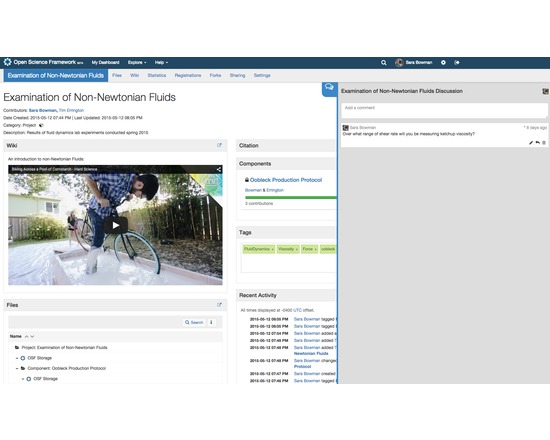
The Open Science Framework (OSF) is a free, open source tool designed to help researchers manage the entire research workflow: planning, execution, reporting, archiving and discovery. It is part collaboration software and part version control system. The OSF can be used to manage individual projects or large collaborative ones. Privacy and sharing settings allow for fine-grained control over access to files and materials stored on the platform - share privately with collaborators or publicly with the community at large. Each project, contributor, and file on the OSF is given a persistent unique identifier, making all research products citable. The platform also mints DOIs and ARKs through DataCite. A collaborative wiki allows contributors to work on writing materials simultaneously. API connections with other services (Github, Dropbox, Box, Dataverse, Google Drive, figshare, Zotero, Mendeley, Amazon S3) allow researchers to connect other services they already use in order to see all their materials in one place. The OSF also offers a registry for preregistering research projects and/or analysis plans.
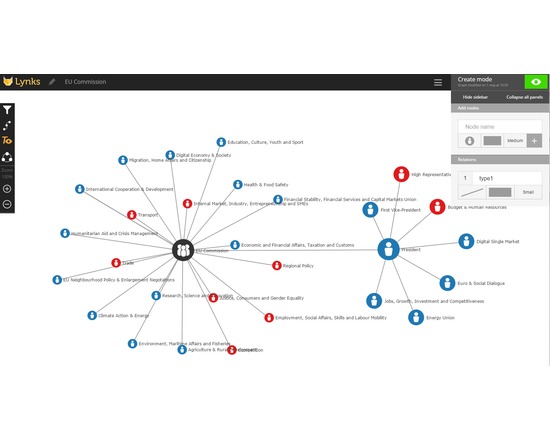
Lynks provides an easy to use, in-browser tool that helps you to create your own networks. Lynks is an initiative by Centre for Innovation, part of Leiden University (Campus The Hague). The software has been developed in 2014 in co-creation, with expertise from Dr. Eelke Heemskerk from University of Amsterdam. The software development has been supported by the financial contributions from the European Union Fund for Regional Development (EFRO) and the Municipality of The Hague.
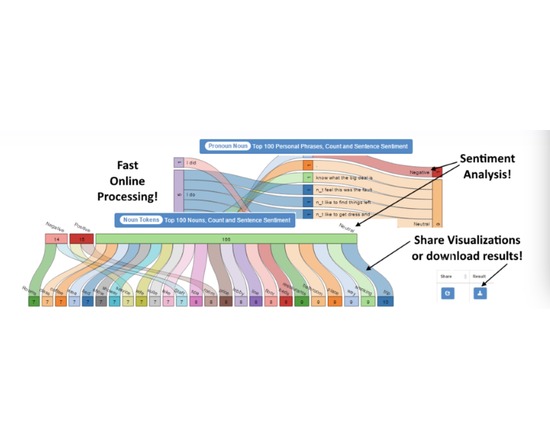
SentimentBuilder is an online tool that performs text analytics on emails, reviews, feedback, chat data or any unstructured texts via Natural Language Processing. It's the only tool where you can upload a file for processing and then visually view the results in a Sankey Flow Report to quickly identify trends, issues and strengths and then customize each view, save and share! Export any result for your own offline analysis! Try the Always Free version today and upload your own data or try one of our sample files.
Rated 0.0 out of 5.★★★★★0.0
Eris Solver - Free Crowdsolver for Complex Problems
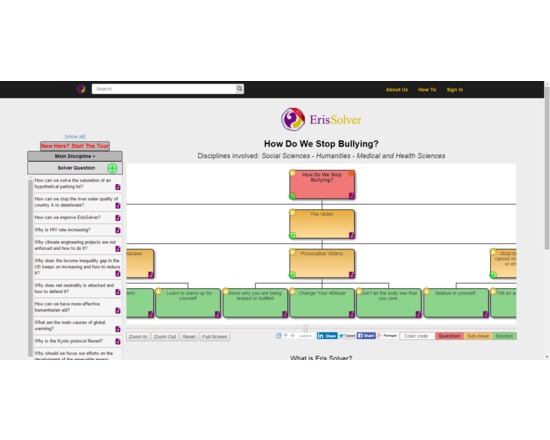
Eris Solver is a free crowd-solver for complex problems. It implements an innovative way to solve complex problems by adapting brainstorming technique to a Problem Tree Analysis and by channelling Collective Intelligence. When simple problem may require a unique solution to be solved, Complex problems behave differently and multiple solutions are sometimes necessary to solve them. On the contrary to simple problem that may not need further deepening, a complex problem may be broken up in multiple small ones that help us understand the big picture. Every branch of the issue tree represent a different aspect of the problem, problems can be decomposed this way until reaching the bottom line where solutions to the ultimate sub-issues are added. Eris Solver uses an interdisciplinary approach and users are allocated into six major areas of expertise
STACK is an extensible social media research toolkit designed to collect, process, and store data from online social networks. The toolkit is an ongoing project via the Syracuse University iSchool, and currently supports the Twitter Streaming API. Collecting from Facebook public pages and Twitter search API are under development. The toolkit architecture is modular and supports extending. Basic Linux / Mac command line skills needed. To learn more: https://github.com/bitslabsyr/stack