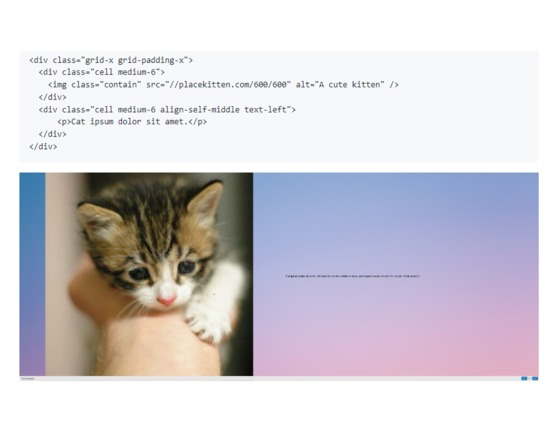
Vast is an open source tool that that is used to assist in the creation of web content to fit on very large displays. It helps the developer design web page while taking into consideration display aspect ratio, display size, content fit and viewing distance. The aim of this tool is to make design for large displays accessible for everyone. Examples and demos can be found in the tools GitHub webpage.
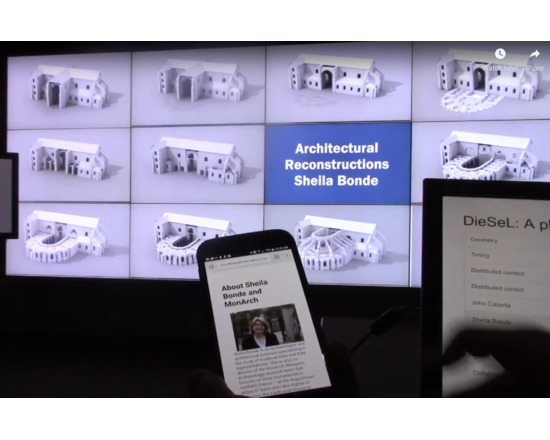
Glider is a app that facilitates the display of content on on large display walls and the interaction with this content by users from other devices. With Glider, you can format your content to fit the dimensions of your display wall, You can set timers for the display to change on the entire display wall or on different sections of the display wall, set up content to be displayed on the different connected devices and control the displays remotely. Development seems to have stopped before a stable state was reached. There is a wealth of information on the project's website.
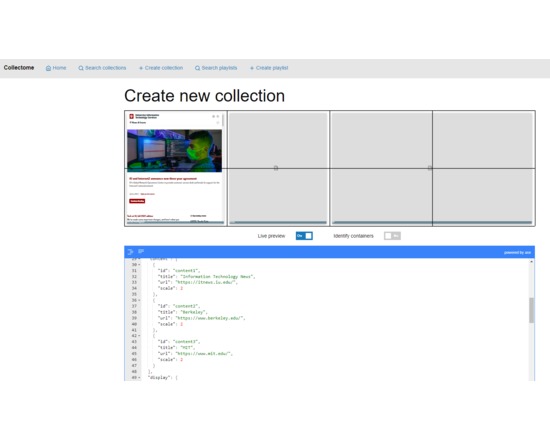
Collectme is a content sharing platform that can be use to build content for large displays like data walls. It was developed under the immersive scholars project. It is a free to use service available online. You can curate and create a media collection that fits your display and share it with others. You can also use templates created by other users. Through your browser you can make an immersive exhibit of your collection by presenting it on a data wall.
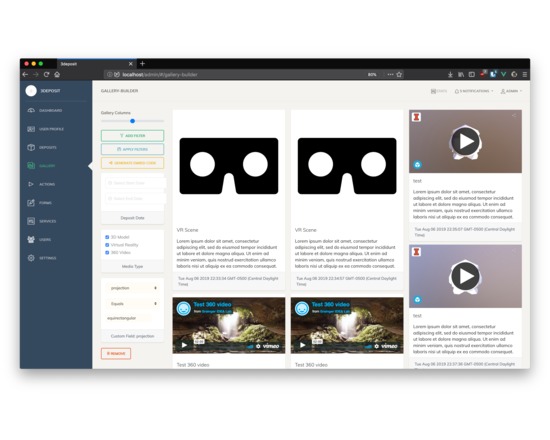
3deposit is a platform for storing, distribution and depositing 3D-content. It uses the MinIO to store the 3D objects. Objects can be stored locally and remotely It stores 3 main types of media: 3D models, 360 videos and Virtual Reality applications These media files can be processed and published by Sketchfab, Vimeo and Amazon Web Services respectively. It is deployed using docker.
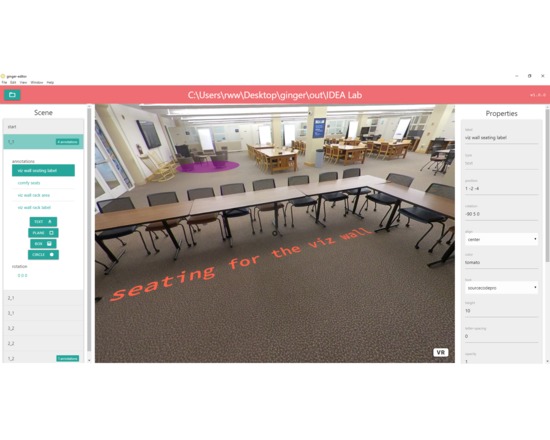
Ginger is an application that is used to generate 360 Virtual reality tours from 360 images located in a folder. It uses a command line tool to generate the virtual reality tour which can be viewed with a web browser. It also comes with the Ginger Editor which is used to preview, annotate and edit the generated tour. It was developed under the Immersive Scholar project hosted by the University of Illinois. The last commit on GitHub was over two years ago so it is no longer in active development.
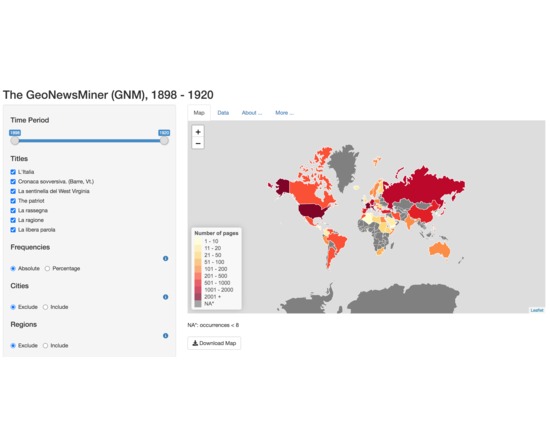
This is a project that had as goal to show on a map the references to geographical location from the text of publications from Italian language newspapers published in the United States between 1898 and 1920. They have made the code and dataset publicly available on GitHub and hence can be used by scholars with a similar project. A review of this project is available here https://utrecht-university.shinyapps.io/GeoNewsMiner/
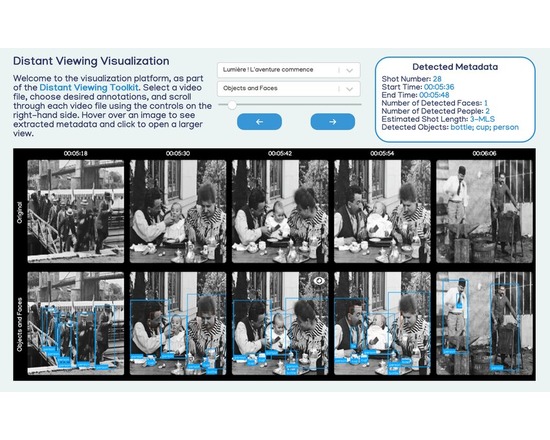
Distant Viewing Toolkit is a Python package for the computational analysis of images and videos using computer vision algorithms. High level analysis produces semantic metadata from the for the digital collection which can then be search, visualized or analyses to identify differences and patterns. A good documentation of the methods of the module can be found in the tools GitHub page. A review of the tool can be found here https://reviewsindh.pubpub.org/pub/distant-viewing-toolkit/release/1
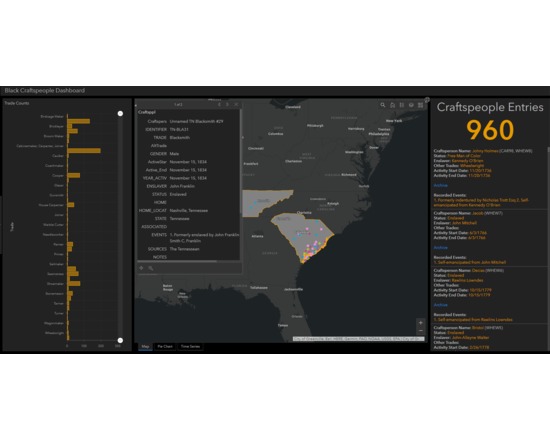
This is a digital archive that keeps a record of black people both free and enslaved involved in producing the valued architecture, handcrafts, and decorative arts of the American South. The archive starts in 1619. There are currently hundreds of records of blacks involved in 45 trades. The website has an interactive and searchable map.
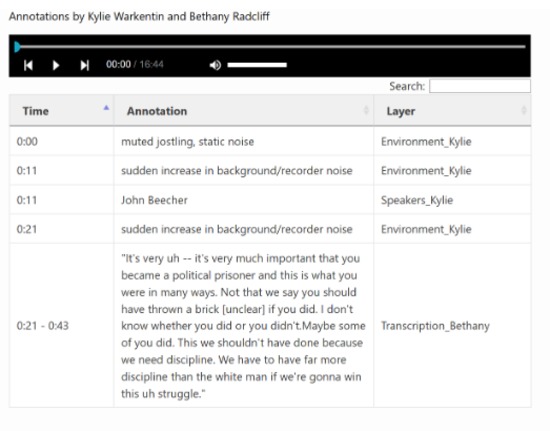
AUdiAnnotate is a web applications that is used to create IIIF file of audios and videos but adding annotations and/metadata. This makes the audiovisual material more accessible to users since the file can be queried using the metadata. Users will need a GitHub account to access the AudiAnnotate application and to host the files generated. The resulting IIIF object will be made available through an HTML link. The HTML files produced are hosted on GitHib and can be edited to change the way it if displayed. The AudiAnnotate is still active and the applications is constantly being updated. A review of AudiAnnotate can be found at https://reviewsindh.pubpub.org/pub/audiannotate/release/3
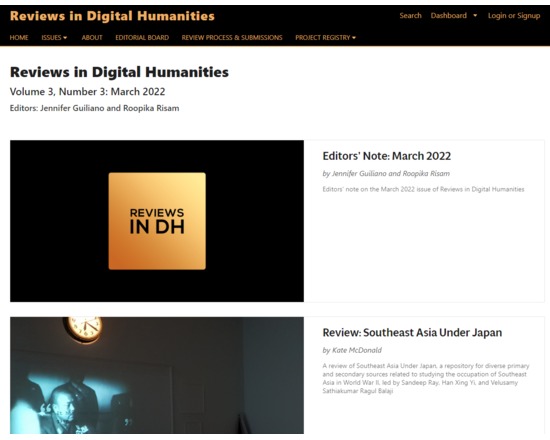
Reviews in Digital Humanities is a pilot of a peer-reviewed journal that facilitates scholarly evaluation of digital humanities work and its outputs. This may include, but is not limited to: digital archives, multimedia or multimodal scholarship, digital exhibits, visualizations, digital games, digital tools, and digital projects. The journal is hosted by PubPub. The journal responds to the challenge of the growth of the number and scale of digital projects outpacing review opportunities in existing journals. As such, it intervenes by bridging a gap in the evaluation of digital projects by arranging for peer review of digital scholarship. Project creators can submit their projects for review. RDH publishes monthly issues with an average of 5 reviews per issue. It also contains a registry of projects, some of which have not yet been reviewed. As of June 2022, Reviews in Digital Humanities has more than 76,800 page views, with 17,350+ unique users from 124 countries. Among fields of study for the projects we have reviewed, 30% of projects are in African diaspora studies, 21% are in Latinx studies, 9% are in Global Indigenous studies, and 19% are in Queer studies. The remaining 21% come from a variety of fields.