Skip to content
TAPoR Text Analysis Portal for Research

Tools

Sort by Name Rating Date ↓

Discovering

oldweb.today

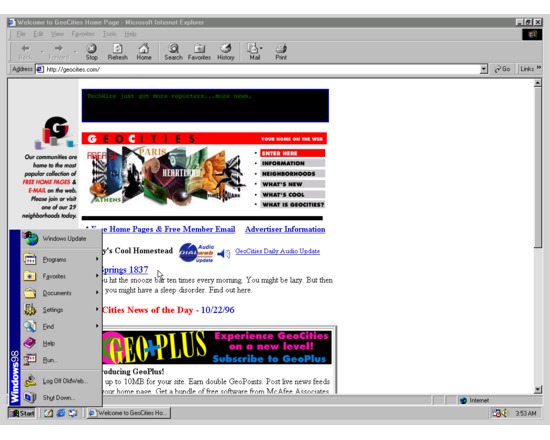
oldweb.today (OWT) is a system that connects emulated web browsers to web archives, allowing users to browse the old web, today, as it was! On the home page, you can choose what browser you want to run. It has browsers as early as the Mosaic browser.

Rated 0.0 out of 5.

Visualization

Communalytic

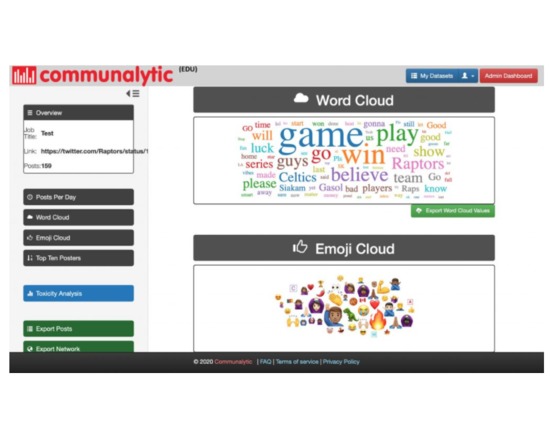
Communalytic is a research tool for studying online communities and online discourse. Communalytic can collect and analyze public data from social media platforms. It uses advanced text and social network analysis techniques to automatically pinpoint toxic and anti-social interactions, identify influencers, map shared interests and the spread of misinformation, and detect signs of possible coordination among seemingly disparate actors.

Rated 0.0 out of 5.

Search

Sketch Engine

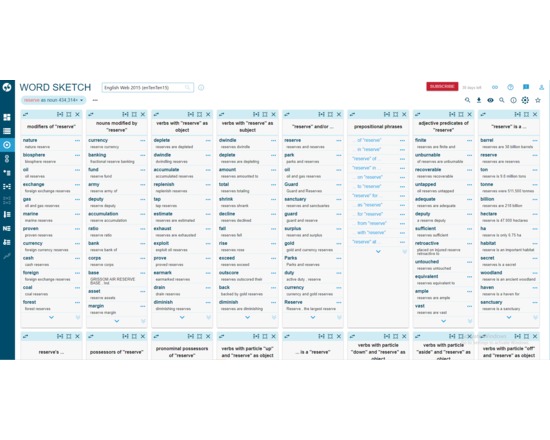
Sketch Engine is a tool to explore how language works. Its algorithms analyze authentic texts of billions of words (text corpora) to identify instantly what is typical in language and what is rare, unusual or emerging usage. It is also designed for text analysis or text mining applications. Sketch Engine is used by linguists, lexicographers, translators, students and teachers. It is a first choice solution for publishers, universities, translation agencies and national language institutes throughout the world. Sketch Engine contains 500 ready-to-use corpora in 90+ languages, each having a size of up to 30 billion words to provide a truly representative sample of language. Some of its functions are: word sketch, sketch difference, thesaurus, concordance, parallel concordance, wordlist, n-grams, keywords & terms, bilingual term extractiontrends and OneClick Dictionary.

Rated 0.0 out of 5.

Analysis

KH Coder

KH Coder is a free software for quantitative content analysis or text mining. It is also utilized for computational linguistics. You can analyze Catalan, Chinese (simplified), Dutch, English, French, German, Italian, Japanese, Korean, Portuguese, Russian, Slovenian and Spanish text with KH Coder.

Rated 0.0 out of 5.

Visualization

OSoMe

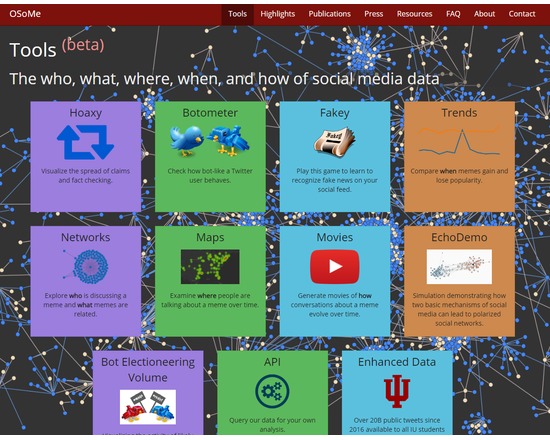
OSoMe (awe•some) is a joint project of the Indiana University Network Science Institute (IUNI) and the Center for Complex Networks and Systems Research (CNetS), aimed to study information diffusion in social media. Here we highlight findings, publications, and resources. Use our tools to explore how ideas spread through online social networks. Hoaxy: Visualize the spread of claims and fact checking. Botometer: Check how bot-like a Twitter user behaves. Fakey: PLay this game to learn to recognize fake news on your social feed. Trends: Compare when memes gain and lose popularity. Networks: Explore who is discussing a meme and what memes are related. Maps: Examine where people are talking about a meme over time. Movies: Generate movies of how conversations about a meme evolve over time. EchoDemo: Simulation demonstrating how two basic mechanisms of social media can lead to polarized social networks. Bot Electioneering Volume: Visualizing the activity of likely bots on Twitter around the 2018 US midterm elections. As well as API and Enhanced Data available.

Rated 0.0 out of 5.

Collaboration

Media Share

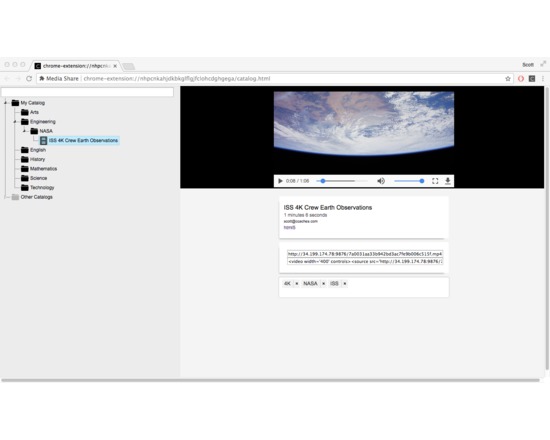
There is an unlimited number of videos, PDFs, etc. that can be used for education, training, instruction, or professional development. Finding and curating them into playlists, integrating with existing workflow, and sharing with others is time consuming, inefficient, and often limited by ‘vendor lock-in.’ Media Share is a productivity tool that saves time, requires no training to use, and does not limit how or where content can be used.

Rated 0.0 out of 5.

Search

Mozenda

Mozenda offers a web scraping tool/service that you can use to build agents that scrape and then organize how you want the data. You use a client side Windows. They have a free 30 day trial. Otherwise a commercial service.

Rated 0.0 out of 5.

Search

80legs

80legs is a web crawling service. You need to get an account and then you can create custom crawls that run in the cloud. They also let you filter their Giant Web Crawl and provide clean data about the web.

Rated 0.0 out of 5.

Visualization

Heurist Data Manager / Visualiser / Publisher

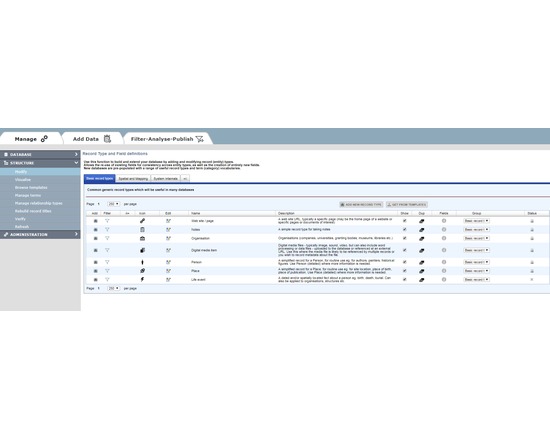
HEURIST (http://HeuristNetwork.org) is an extremely flexible, end-user oriented, web-based data management system designed specifically for Humanities data. Developed since 2005, it has been in active use across many projects since 2009. It is available both as a free web service for researchers (hosted at the University of Sydney Data Centre) or for installation on a physical or virtual server (Open Source on gitHub). Researchers can design, create, manage, analyse, visualise and publish their own richly-structured database(s) through a simple web interface, without the need for programmer(s). Quite complex databases can be built in a few hours by borrowing structures and vocabularies published by other users. Databases can be designed and built incrementally, as existing data are not affected by changes in structure. Databases created by Heurist are stored in MySQL with a repeatable structure facilitating sustainability and independent access by other software. Advanced features include record linking, graph structure, drill-down facet searches, rule-based queries, custom reports, linked map-timelines, network visualisation, normalised spreadsheet import, crosstabulation, XML feeds, XSLT transforms. The team provides initial email and skype assistance for project setup at no cost, and special customisations at modest cost. Heurist is applicable in many domains including History, Archaeology, Anthropology, Cultural Research, Linguistics, Media Studies etc. It handles everything from text, tags and categories, through networks of rich relationships and offset annotations, to images, video, spatial data and dating (including non-western systems and dating uncertainty). Sophisticated searches (including faceted and rule-based) can be saved, organised and rendered as layered interactive maps, timelines, network visualisations, crosstabulations, lists, custom reports, XML and XSLT transforms, all of which can easily be printed or embedded (live) in a website - Heurist provides the html code required to embed results in a web page or CMS. Databases can easily be migrated later to a personal or institutional server. Since the data are stored in a standard MySQL database with a fixed and well-documented structure, the data can be accessed directly via SQL from most programming languages independently of Heurist. Version 4.2 (Jan 2016 onwards) is available as a service via the Heurist website. Version 4 delivers a user-customisable interface of widgets, along with better mapping and visualisation. Existing version 3 databases are bidirectionally compatible with version 4.

Rated 5.0 out of 5.

Publishing

Pastpin

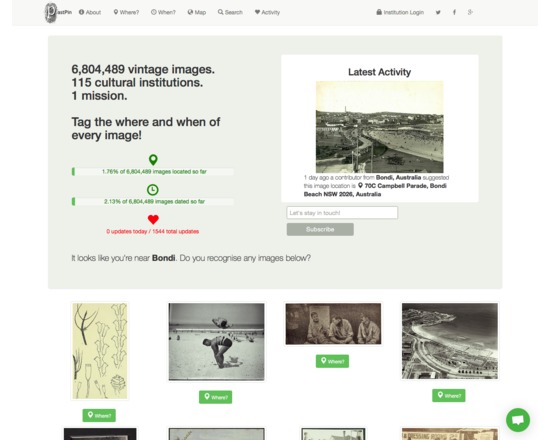
Pastpin is a cultural search engine that aims to showcase the 7M historical images available from Flickr Commons. Users are prompted to add new metadata (geocodes, temporal data) to existing images that they may recognise based on their current location. The goal of the project is to crowdsource spatial and temporal metadata for these objects. Visitors to the site can search or browse by using free text, or by going directly to the map and clicking on a thumbnail to view images directly.

Rated 0.0 out of 5.