Skip to content
TAPoR Text Analysis Portal for Research

Tools

Sort by Name Rating ↓ Date

Visualization

Heurist Data Manager / Visualiser / Publisher

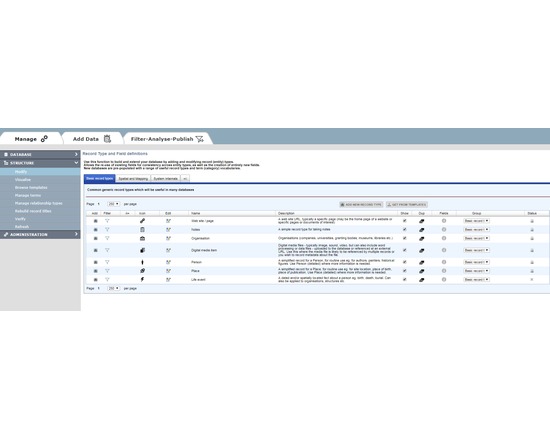
HEURIST (http://HeuristNetwork.org) is an extremely flexible, end-user oriented, web-based data management system designed specifically for Humanities data. Developed since 2005, it has been in active use across many projects since 2009. It is available both as a free web service for researchers (hosted at the University of Sydney Data Centre) or for installation on a physical or virtual server (Open Source on gitHub). Researchers can design, create, manage, analyse, visualise and publish their own richly-structured database(s) through a simple web interface, without the need for programmer(s). Quite complex databases can be built in a few hours by borrowing structures and vocabularies published by other users. Databases can be designed and built incrementally, as existing data are not affected by changes in structure. Databases created by Heurist are stored in MySQL with a repeatable structure facilitating sustainability and independent access by other software. Advanced features include record linking, graph structure, drill-down facet searches, rule-based queries, custom reports, linked map-timelines, network visualisation, normalised spreadsheet import, crosstabulation, XML feeds, XSLT transforms. The team provides initial email and skype assistance for project setup at no cost, and special customisations at modest cost. Heurist is applicable in many domains including History, Archaeology, Anthropology, Cultural Research, Linguistics, Media Studies etc. It handles everything from text, tags and categories, through networks of rich relationships and offset annotations, to images, video, spatial data and dating (including non-western systems and dating uncertainty). Sophisticated searches (including faceted and rule-based) can be saved, organised and rendered as layered interactive maps, timelines, network visualisations, crosstabulations, lists, custom reports, XML and XSLT transforms, all of which can easily be printed or embedded (live) in a website - Heurist provides the html code required to embed results in a web page or CMS. Databases can easily be migrated later to a personal or institutional server. Since the data are stored in a standard MySQL database with a fixed and well-documented structure, the data can be accessed directly via SQL from most programming languages independently of Heurist. Version 4.2 (Jan 2016 onwards) is available as a service via the Heurist website. Version 4 delivers a user-customisable interface of widgets, along with better mapping and visualisation. Existing version 3 databases are bidirectionally compatible with version 4.
Rated 5.0 out of 5.

Search

Comparator - Plain Text (TAPoRware)

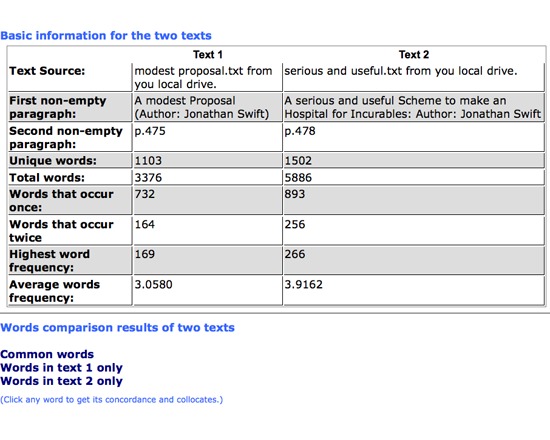
This tool compares two documents by comparing the words in each according to user specifications. HTML and XML versions are also available in the TAPoRware toolsets. This tool’s functionality has been incorporated into Voyant available online at www.voyant-tools.org

Rated 5.0 out of 5.

Natural Language Processing

TUSTEP

TUSTEP (Tubingen System of Text Processing Tools) is a free, open source, widely-used toolbox for text processing. It is aimed at scholarly audiences, can work with texts in both latin and non-latin scripts, and is primarily designed for humanites applications. Its modules include data capture, information retrieval, text collation, text analysis, sorting and ordering, rule-based textual manipulation, data export and typesetting. The user manual is only available in German at this time. This tool has been in continuous development since the 1960s.

Rated 5.0 out of 5.

Collaboration

Sophie

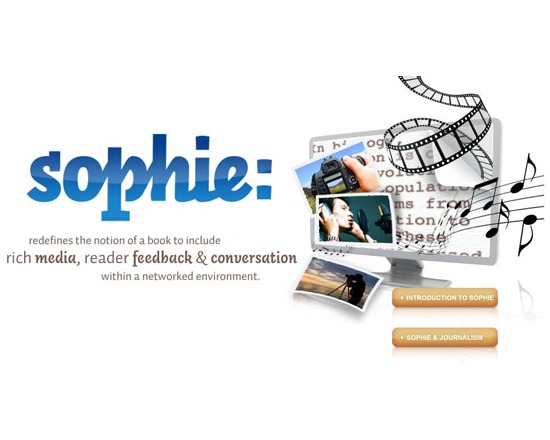
Sophie is a free, creative commons authoring tool from the Institute for the Future of the Book and the University of Southern California's School of Cinematic Arts that enables collaboration, reading and publication. Its highlights include an authoring environment that allows users to create complex networked multimedia documents, a reader than opens books in a browser without downloading additional software, comment frames for adding discussions within books, digital libraries compatible with the Sophe iPad app, timeline creation and collaborative book creation. As of version 2.1, Sophie includes HTML5 export for data integrating multimedia content and for use on a wide variety of devices.

Rated 3.0 out of 5.

Search

GATE (General Architecture for Text Engineering)

GATE (General Architecture for Text Engineering) is free, open source software offered by the University of Sheffield since 1995. It provides a framework for users to gather a corpus, apply an ontology to it, develop markup, automate the application of the markup to the corpus and add tools such as knowledge facet search, ontology browsing or graphing.

Rated 3.0 out of 5.

Capture

Aggregator - Other (TAPoRware)

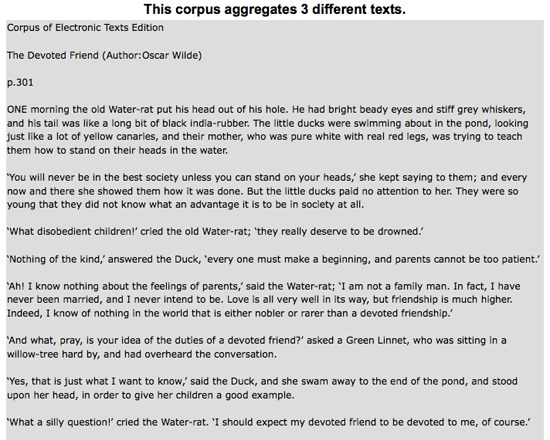
This tool aggregates texts/subtexts from different locations into a single text. The original texts can be from a user-specified web page or files located on one's computer. Aggregating subtexts requires all documents to share a common subtext tag, such as the <body> tag. The aggregator tool will grab the contents from the texts to form a single new text.

Rated 1.0 out of 5.

Search

CHNM: Scribe

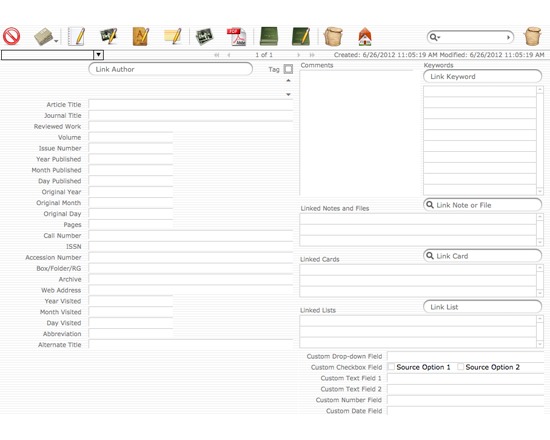
Scribe, now in version 3.5, is a free note-taking program available for both PC and Mac. Aimed particularly at historians, this program allows researchers to create digital note cards for managing sources, research notes, contacts, images, glossaries, outlines, timelines and more. Furthermore, it enables organization, keyword indexing, searching, linking and cross-referencing of all entries. Entries can be entered directly or imported from online catalogues such as Amazon.com. Information entered in Scribe can be exported directly to Zotero in addition to assembling, printing or copying formatted bibliographies directly from the program. Articles can be stored directly within the program, enabling researchers to search out and highlight particular words within the text in addition to the relevant researcher notes.

Rated 0.0 out of 5.

Publishing

TILE (Text Image Linking Environment)

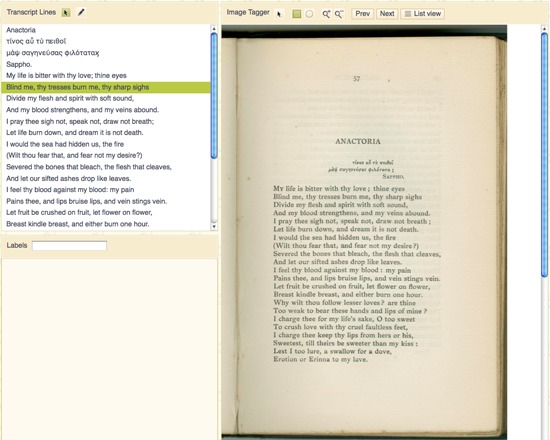
The Text-Image Linking Environment (TILE) is a web-based tool that enables users to select regions of an image and link them to text. TILE is a system for creating and editing image-based electronic editions and connecting them to digital archives of the texts. It has been designed for easy modification by integrating a plugin infrastructure.

Rated 0.0 out of 5.

Search

MONK (Metadata Offer New Knowledge)

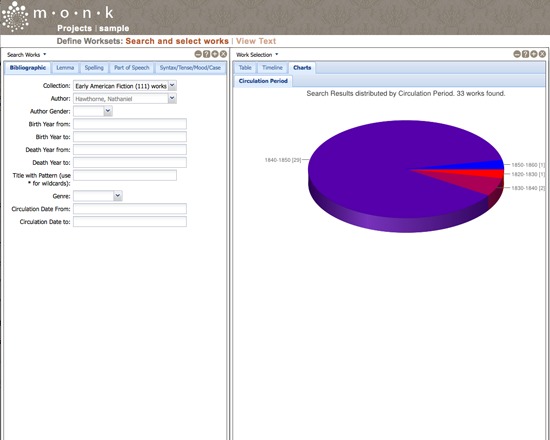
MONK (Metadata Offer New Knowledge) is a digital environment for humanities scholars. It is desgined to assist with the discovery and analysis of patterns within texts, incorporating full text content from corpora such as ECCO, EEBO and Early American Fiction directly into the tool. The MONK Workbench is the primary environment, permitting users to create worksets, perform analytics and save their results. In addition, the MONK workbench can be used in conjunction with the Flameco faceted browser and Zotero.

Rated 0.0 out of 5.

Search

WordHoard

WordHoard is a tool for the study of large texts or transcribed speech. It annotates or tags texts by applying morphological, lexical, prosodic, and narratological criteria. Users may apply WordHoard to their own texts, or to the corpora included with the tool. At present, that corpora includes the entire canon of Early Greek epic (original and in translation), Chaucer, Shakespeare and Spencer.

Rated 0.0 out of 5.