
Analysis
IITagger
IITagger was a part of speech tagging system developed in the 1990s to assign part of speech information to words from the Wall Street Journal .
For researchers who work with text
TAPoR catalogues concordancers, annotators, topic models, stylometry packages, and visualization environments. Every record notes the platform, the license, and what the tool is actually good for.
Filter by the type of analysis.
Analysis
IITagger was a part of speech tagging system developed in the 1990s to assign part of speech information to words from the Wall Street Journal .
Analysis
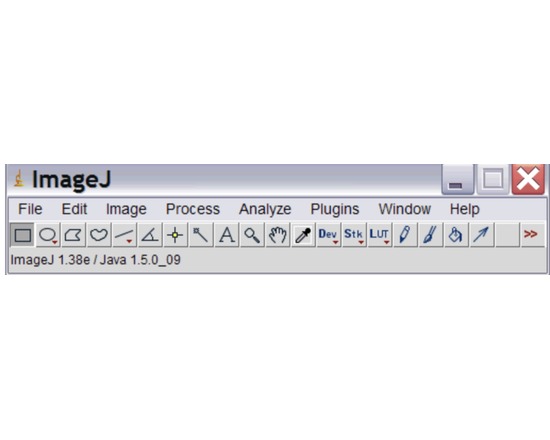
ImageJ is a Java open source image processing program designed for scientific multidimensional images. It is highly extensible, with thousands of plugins and macros for performing a wide variety of tasks, and a strong, established user base. There are three major versions of ImageJ: ImageJ1 - The stable version, developed by Wayne Rasband at NIH since 1997 ImageJ2 - Focuses on analysis of scientific multidimensional image data. Includes ImageJ1 with a compatibility layer Fiji - A distribution of ImageJ for the life sciences. It provides a large number of additional plugins to facilitate analysis of life sciences images, particularly microscopy images. Built on the ImageJ2 platform.
Analysis
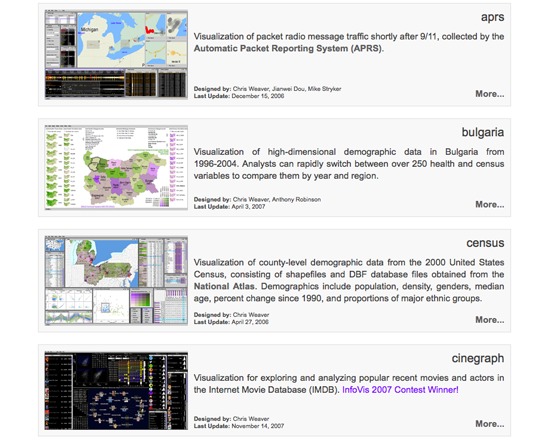
Improvise is a free Java software architecture and user interface designed to enable the construction and browsing of interactive visualizations, integrating a declarative visual query language.

Analysis
Social media research software that provides true understanding of how people feel about any topic being discussed on the social web. Fully customize and white label all your social data projects Integrate social data and text analysis into your business critical applications.
Analysis
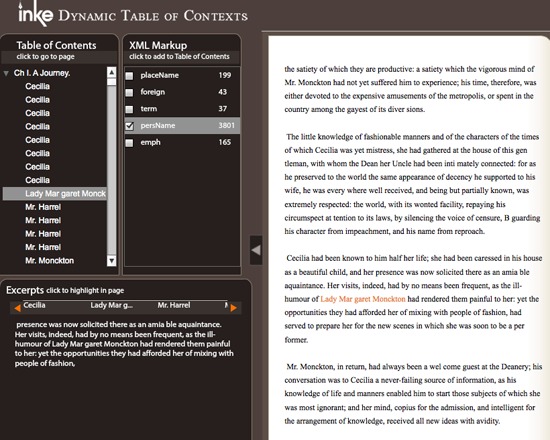
Dynamic Table of Contexts is a free tool for supplementing a traditional table of contents for a text. It allows users to add or subtract index items based on XML encoding. This tool requires the creation of an account.
Analysis
From the official BlackLab site: "BlackLab is a corpus retrieval engine built on top of Apache Lucene. It allows fast, complex searches with accurate hit highlighting on large, tagged and annotated, bodies of text. It was developed at the Institute of Dutch Lexicology (INL) to provide a fast and feature-rich search interface on our historical and contemporary text corpora. BlackLab is licensed under the Apache License 2.0." BlackLab is not an end-user application, but an extension to Apache Lucene. It requires programming experience to use. Several sites have so far been built using BlackLab. The BlackLab FAQ at https://github.com/INL/BlackLab/wiki/Frequently-Asked-Questions lists several of these. BlackLab is very useful as search engine for morphologically adorned corpora. The principal search language syntax is similar to that of traditional corpus search engine tools such as the Corpus Workbench or the Sketch Engine.
Week of 1 Nov – 7 Nov
Three tools from the catalogue, each rated at least 3 stars. A new set appears each Sunday.
Curated list created by experience authors in the fields.

Geoffrey Rockwell
Not all Voyant tools show up in the default view or skin. Here is a list of some of the other tools worth trying.
4 tools
View list
Holly Pickering
Interested in audio production and editing? Here are a few programs that can help you get on your way. Some of them are free, some not, but all are helpful and useful.
3 tools
View list
Jason Bradshaw
This list compiles a suite of tools that make up Kynan Ly's Text Analysis for Twitter Research (TATR) Library. Recipes to these notebooks can be found on methodi.ca
6 tools
View list1321
Tools catalogued
15
Curated lists
22
Analysis types
671
Community reviews
Researchers, power users, and students will soon be able to contribute tools, share reviews, and curate lists around their own work.