Skip to content
TAPoR Text Analysis Portal for Research

For researchers who work with text

Find a text analysis tool that fits the work.

TAPoR catalogues concordancers, annotators, topic models, stylometry packages, and visualization environments. Every record notes the platform, the license, and what the tool is actually good for.

  • Platform, license, and method on every record
  • Reviews from people who teach with the tools
  • Lists assembled around a course or a corpus

Browse tools

Filter by the type of analysis.

View all tools
‹

Annotating

The Field Linguist’s Toolbox

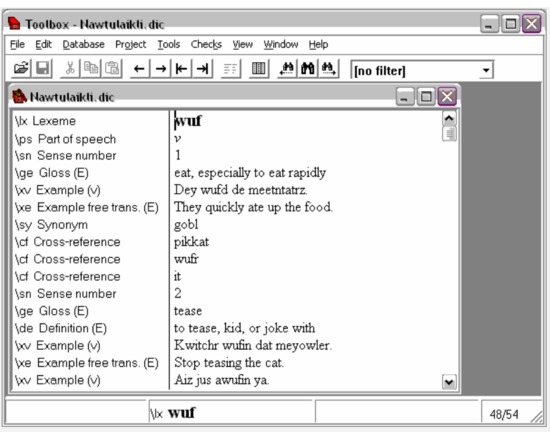
Toolbox is a data management and analysis tool for field linguists. It is especially useful for maintaining lexical data, and for parsing and interlinearizing text, but it can be used to manage virtually any kind of data. Toolbox is free to download and use. Toolbox is especially powerful for handling large corpora and dictionaries. It can handle a corpus of over a million words, and a dictionary of hundreds of thousands of words At heart, Toolbox is a text-oriented database management system (DBMS) with added functionality designed to meet the needs of a field linguist. The underlying DBMS offers full user flexibility in the design of any type of database. But for ease of use, the Toolbox package includes prepared database definitions for a typical dictionary and text corpus. Toolbox also has powerful linguistic functionality. It includes a morphological parser that can handle almost all types of morphophonemic processes. It has a word formula component that allows the linguist to describe all the possible affix patterns that occur in words. It has a user-definable interlinear text generation system which uses the morphological parser and lexicon to generate annotated text
Rated 0.0 out of 5.

Annotating

the sourcecaster

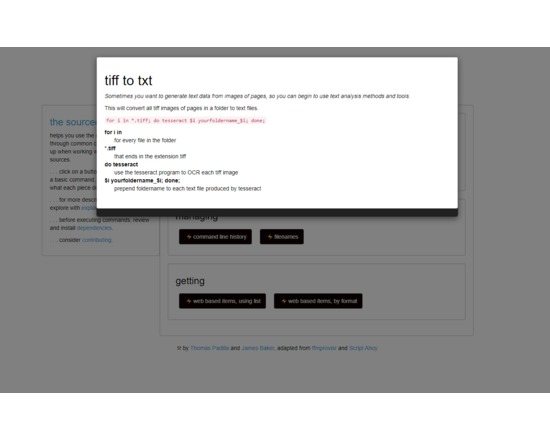
The sourcecaster helps users work in the windows command line. It contains short lines of code that can be used to manipulate files for analysis. File types include image, video, text, audio, etc. Below each line of code are explanations that tell what each part of the code does and so the user can modify the code to suite his/her objectives. The sourcecaster relies on contributions from the community. There are currently very few entries.

Rated 0.0 out of 5.

Annotating

Thinglink

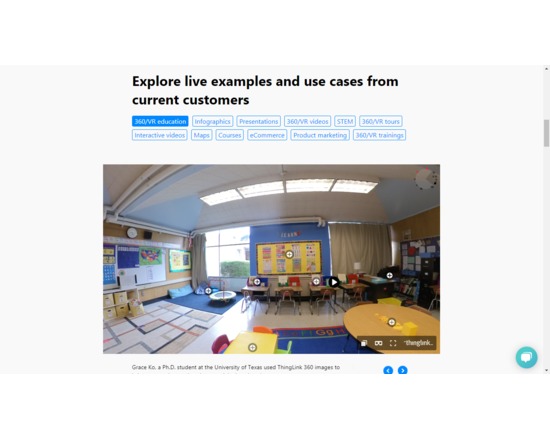
ThingLink is a free and user -friendly digital tool that provides users the ability to turn any image into an interactive graphic. It allows you to make your images, videos, and 360 content interactive with text, links, images, videos and over 70 call to actions, creating memorable experiences for audiences. The web tool and the app allow for teachers and students to provide information in a visual format. It can be considered as a form of annotation of visual multimedia content.

Rated 0.0 out of 5.

Annotating

TitanPad

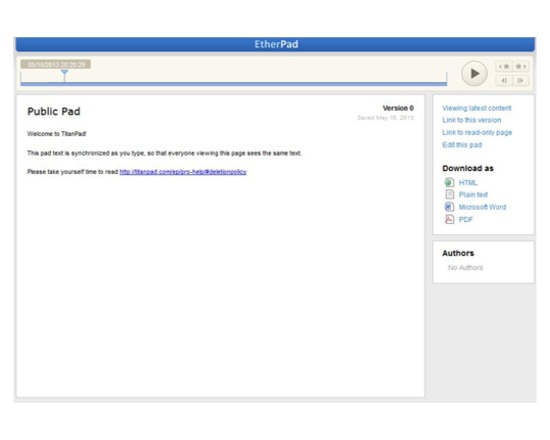
TitanPad is a free web 2.0 tool that enables users to work collaboratively in a single document. Similar to Google Documents, this online tool allows many people to work simultaneously on the document. Users can chat while working on the document, can import existing documents to work on and also export documents from TitanPad. It also provides the option to view previous versions of the document and includes a time slider to view the entire history of the document. TitanPad was effectively shutdown on the 31st of December 2017 because of unsustainability.

Rated 0.0 out of 5.

Annotating

Topincs

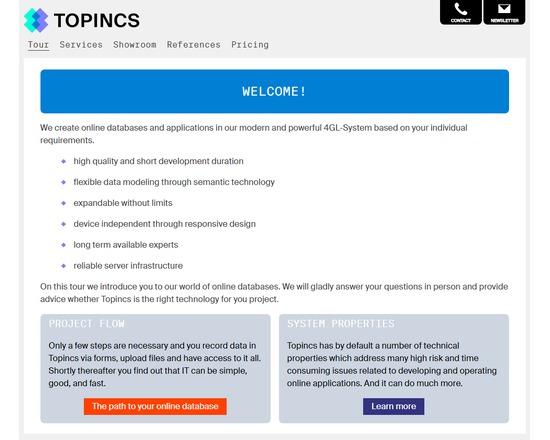
Topincs is a online database software. Given a data model, it allows data to be recorded and files to be uploaded and annotated through forms, data and files to be displayed and navigated through interconnected data sheets, and all that searched in the index. It overcomes the rigidity of relational databases by using semantic technology. In the simplest use case, a group of users can collaboratively edit information and upload files from any device with a web browser and an internet connection. Development time ranges between 1 and 8 hours. By designing and implementing services, the data can be manipulated, transformed and aggregated through an virtual object oriented programming interface driven by the data model. This allows sophisticated use cases where different user groups with different rights are presented a completely different application working on the same database. In these cases development time ranges between 2 and 20 days. A Topincs online database can be rented for a monthly fee. Topincs provide all services related to an online database: data modeling, programming, and support. They have special rates for educational institutions. Topincs can also be used as a Platform as a Service where the dark art of Topincs modeling and development must be studied online. The underlying semantic technology, Topic Maps, is taught there through hands on examples and will change your view on information technology.

Rated 0.0 out of 5.

Annotating

Transkribus

Transkribus is an OCR platform for transcribing hand-written text. After manually transcribing 100 images, scholars can use a trained Handwritten Text Recognition (HTR) engine at the Technical University of Valencia to automate the transcription of the remaining pages of their documents. The platform has a number of tools and features for users in different disciplines.

Rated 0.0 out of 5.

›

Curated lists

Curated list created by experience authors in the fields.

All curated lists

Geoffrey Rockwell

Cool Voyant Tools

Not all Voyant tools show up in the default view or skin. Here is a list of some of the other tools worth trying.

4 tools

View list

Holly Pickering

Audio Production Software

Interested in audio production and editing? Here are a few programs that can help you get on your way. Some of them are free, some not, but all are helpful and useful.

3 tools

View list

Jason Bradshaw

TATR: Text Analysis for Twitter Research

This list compiles a suite of tools that make up Kynan Ly's Text Analysis for Twitter Research (TATR) Library. Recipes to these notebooks can be found on methodi.ca

6 tools

View list

The catalogue

  • 1321

    Tools catalogued

  • 15

    Curated lists

  • 22

    Analysis types

  • 671

    Community reviews

More is coming

Researchers, power users, and students will soon be able to contribute tools, share reviews, and curate lists around their own work.