Skip to content
TAPoR Text Analysis Portal for Research

For researchers who work with text

Find a text analysis tool that fits the work.

TAPoR catalogues concordancers, annotators, topic models, stylometry packages, and visualization environments. Every record notes the platform, the license, and what the tool is actually good for.

  • Platform, license, and method on every record
  • Reviews from people who teach with the tools
  • Lists assembled around a course or a corpus

Browse tools

Filter by the type of analysis.

View all tools
‹

Annotating

Digitate

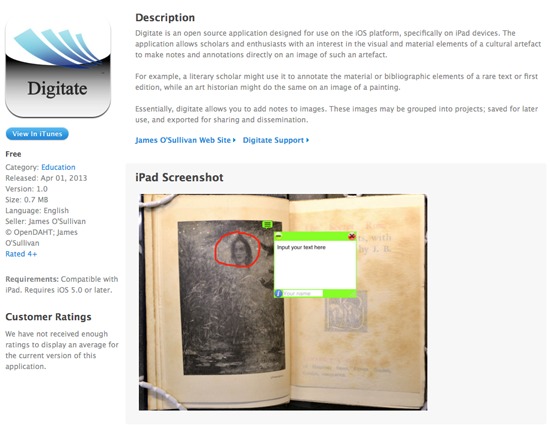
Digitate is a free, open source application for making notes and annotations directly on an image of a cultural artifact such as a manuscript or a painting. Images can also be grouped into projects, saved for later or exported. This application is only available for the iPad.

Rated 0.0 out of 5.

Annotating

Digress.it

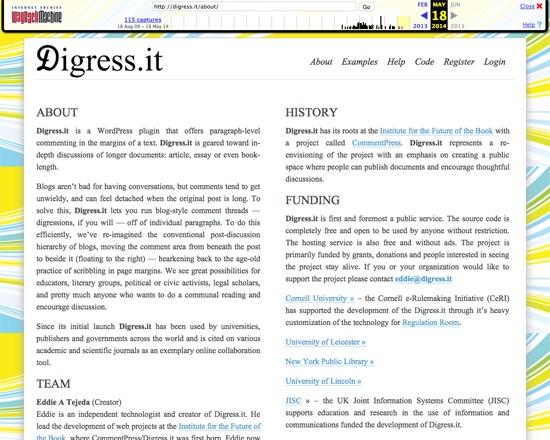
Digress.it was a free, open source WordPress plugin for annotating texts on the paragraph level, particularly of article to book-length documents. It permitted blog-like threaded discussions to occur in the margins of the text, and was aimed at facilitating scholarly, literary, political and other discussions. While the main website is no longer available, Digress.it is still available via the WordPress plugin directory .

Rated 0.0 out of 5.

Annotating

DocumentCloud

Designed for journalists, a web-based service for working with primary sources that features search and analysis, highlighting and annotation, and document sharing. Uses Tesseract for OCR and allows users to upload documents and search other its document collection.

Rated 0.0 out of 5.

Annotating

Domeo Annotation Toolkit

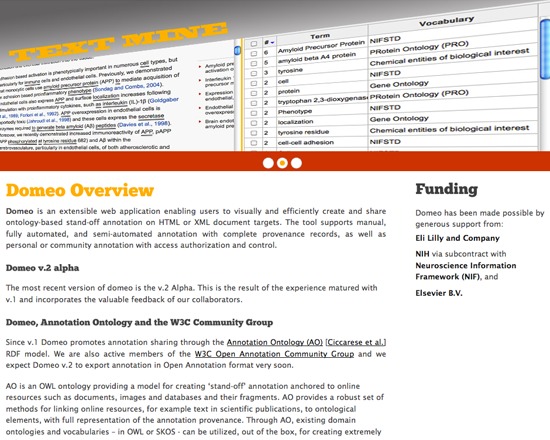
The Domeo Annotation Toolkit was an extensible web application for creating and sharing ontology-based stand-off annotations on HTML or XML documents. Users could add annotations manually, or via the tool's full or partial automation options. It also included functions for controlling access authorization and control for both personal and community annotations.

Rated 0.0 out of 5.

Annotating

Editors' Notes

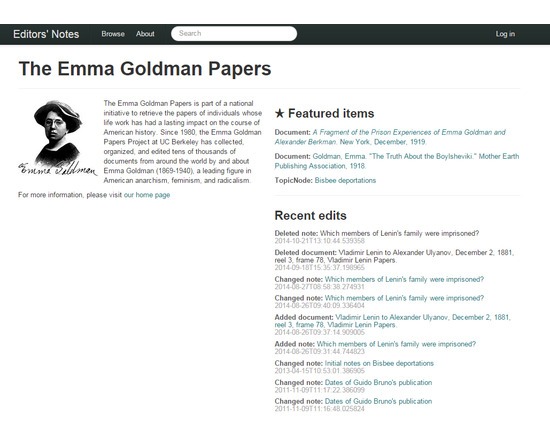
Editors' Notes is an open-source, web-based tool for recording, organizing, preserving, and opening access to research notes, built with the needs of documentary editing projects, archives, and library special collections in mind. Projects that work closely with documents—researching, contextualizing, and ordering them—invariably produce massive amounts of thorough research notes which are too often locked away in filing cabinets or the minds of editors and curators, never to be seen by anyone. The Editors' Notes project is a collaboration between the editors of the Stanton-Anthony Papers, the Emma Goldman Papers, the Margaret Sanger Papers, and the Labadie Collection which aims to preserve those research notes in a way that makes them useful to future scholars and interested minds. Research teams can use Editors' Notes to manage their research and note-taking. Project administrators can assign research tasks to other team members, and they can control who has permission to edit their project's notes. Notes can be organized around documentary sources or thematically around topics (or both). Users can browse by topic, search full text, and filter using bibliographic metadata. Documents can be annotated with bibliographic metadata, topic keywords, and textual notations. Researchers can also upload scanned images of documents into the zoomable interface. Researchers can annotate specific passages in document transcripts. Annotations, like other notes, can include bibliographic metadata and topic keywords and are fully searchable. In addition to creating annotated transcripts, researchers can upload scanned images of documents, which can be viewed in a zoomable interface. New accounts are by invitation only. Request an invitation. Editors' Notes is currently in limited beta release (Nov 10/14)

Rated 0.0 out of 5.

Annotating

eLaborate

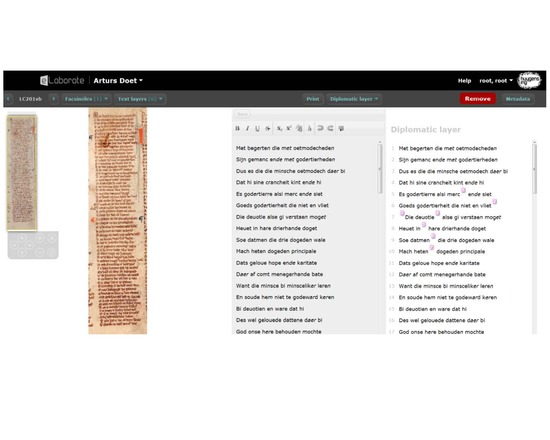
eLaborate is an online work environment in which scholars can upload scans, transcribe and annotate text, and publish the results as on online text edition which is freely available to all users.

Rated 0.0 out of 5.

›

Curated lists

Curated list created by experience authors in the fields.

All curated lists

Geoffrey Rockwell

Cool Voyant Tools

Not all Voyant tools show up in the default view or skin. Here is a list of some of the other tools worth trying.

4 tools

View list

Holly Pickering

Audio Production Software

Interested in audio production and editing? Here are a few programs that can help you get on your way. Some of them are free, some not, but all are helpful and useful.

3 tools

View list

Jason Bradshaw

TATR: Text Analysis for Twitter Research

This list compiles a suite of tools that make up Kynan Ly's Text Analysis for Twitter Research (TATR) Library. Recipes to these notebooks can be found on methodi.ca

6 tools

View list

The catalogue

  • 1321

    Tools catalogued

  • 15

    Curated lists

  • 22

    Analysis types

  • 671

    Community reviews

More is coming

Researchers, power users, and students will soon be able to contribute tools, share reviews, and curate lists around their own work.