Skip to content
TAPoR Text Analysis Portal for Research

For researchers who work with text

Find a text analysis tool that fits the work.

TAPoR catalogues concordancers, annotators, topic models, stylometry packages, and visualization environments. Every record notes the platform, the license, and what the tool is actually good for.

  • Platform, license, and method on every record
  • Reviews from people who teach with the tools
  • Lists assembled around a course or a corpus

Browse tools

Filter by the type of analysis.

View all tools
‹

Natural Language Processing

jsLDA

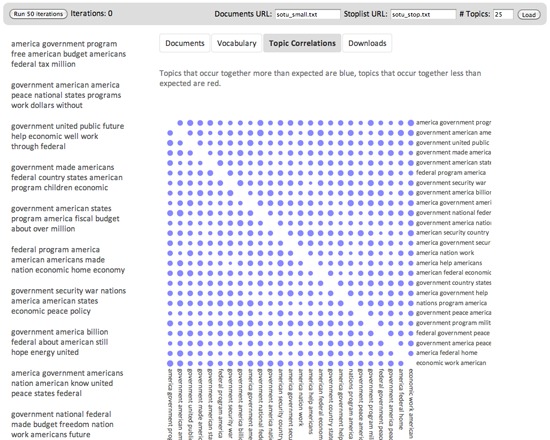
jsLDA is a free, open source tool for corpus-based in browser topic modelling. Users can test the tool via the provided demo, or download the source code to run on their own system. Users can load any corpus accessible from a URL, and can train the tool on the topics within the corpus via the iteration function. Once jsLDA has been trained to the user's satisfaction, documents can be sorted according to topic and explored based on topic correlations.

Rated 0.0 out of 5.

Natural Language Processing

LEMMA

LEMMA was a program package for lemmatizing German word-forms released in 1978. It was designed to work with computer-readable corpora. The algorithm was implemented in PL/I on an IBM 370/168 computer.

Rated 0.0 out of 5.

Natural Language Processing

Lexa

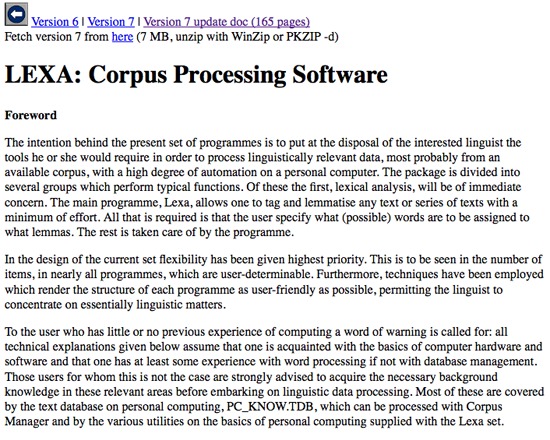
Lexa is a free legacy set of programs for corpus processing. It is designed to tag and lemmatize texts or series of texts. The website for Lexa is no longer maintained or active, but may still be viewed via the Internet Archive.

Rated 0.0 out of 5.

Natural Language Processing

LEXICO

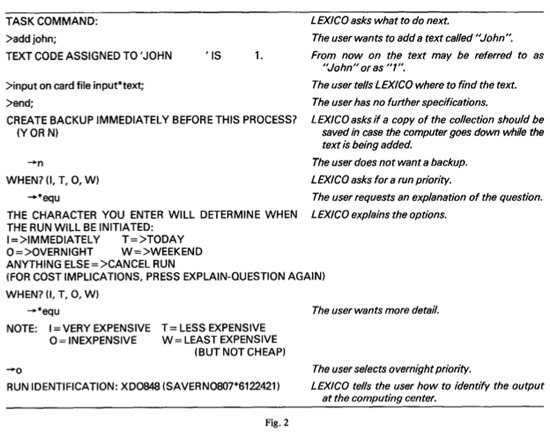
LEXICO was an interactive system designed to assist lexographers in text analysis. It assisted in storing, editing and concording texts, lemmatizing word lists and generating 'slips' containing a single word with its lemma, context and source.

Rated 0.0 out of 5.

Natural Language Processing

LISP

LISP is a longstanding high-level programming language first developed in the late 1950s. Within the humanities, it was applied to computational linguistics and natural language processing research.

Rated 0.0 out of 5.

Natural Language Processing

LitViz

LitViz is a tool available online for the visualisation of text-information as a 3D-graph. The algorithm uses multiple techniques from NLP (Natural Language Processing) like Stanford PoS-Tagger, Lemmatizer, Tokenizer and more to generate the necessary dataset for the 3D-function.

Rated 0.0 out of 5.

›

Curated lists

Curated list created by experience authors in the fields.

All curated lists

Geoffrey Rockwell

Cool Voyant Tools

Not all Voyant tools show up in the default view or skin. Here is a list of some of the other tools worth trying.

4 tools

View list

Holly Pickering

Audio Production Software

Interested in audio production and editing? Here are a few programs that can help you get on your way. Some of them are free, some not, but all are helpful and useful.

3 tools

View list

Jason Bradshaw

TATR: Text Analysis for Twitter Research

This list compiles a suite of tools that make up Kynan Ly's Text Analysis for Twitter Research (TATR) Library. Recipes to these notebooks can be found on methodi.ca

6 tools

View list

The catalogue

  • 1321

    Tools catalogued

  • 15

    Curated lists

  • 22

    Analysis types

  • 671

    Community reviews

More is coming

Researchers, power users, and students will soon be able to contribute tools, share reviews, and curate lists around their own work.