Skip to content
TAPoR Text Analysis Portal for Research

For researchers who work with text

Find a text analysis tool that fits the work.

TAPoR catalogues concordancers, annotators, topic models, stylometry packages, and visualization environments. Every record notes the platform, the license, and what the tool is actually good for.

  • Platform, license, and method on every record
  • Reviews from people who teach with the tools
  • Lists assembled around a course or a corpus

Browse tools

Filter by the type of analysis.

View all tools
‹

Natural Language Processing

LIWC (Linguistic Inquiry and Word Count)

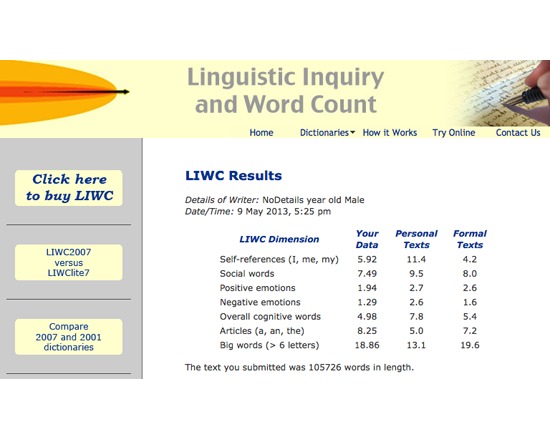
LIWC (Linguistic Inquiry and Word Count) is a text analysis program available for purchase. It calculates the degree to which various categories of words are used in a text, and can process texts ranging from e-mails to speeches, poems and transcribed natural language in either plain text or Word formats. A free, minimalist web version is available through the website.
Rated 0.0 out of 5.

Natural Language Processing

McGill Characterization Process - Character Parser

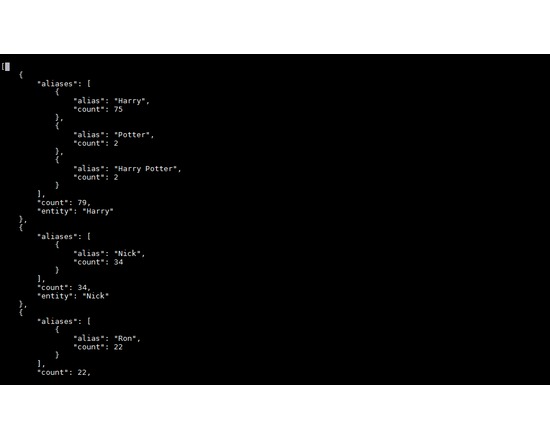
Part of the McGill Characterization Process family. Parses all the texts in a data directory and picks out all the characters and their aliases. Output is in JSON format and is required for the rest of the tools in this family. Extensive setup required. Please consult the readme on github for setup instructions.

Rated 0.0 out of 5.

Natural Language Processing

McGill Characterization Process - Collocate Parser

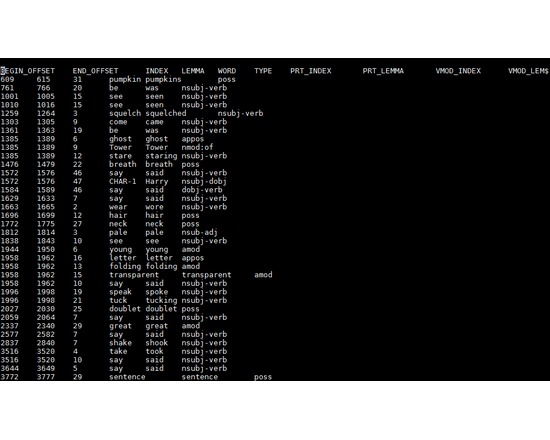
Part of the McGill Characterization Process family. Examines all the texts in a data directory and uses the output from the Alias Identifier to find the collocates for the words in the aforementioned texts. Output is in .tsv format and is required for the rest of the tools in this family. Extensive setup required. Please consult the readme on github for setup instructions.

Rated 0.0 out of 5.

Natural Language Processing

Micro-EYEBALL

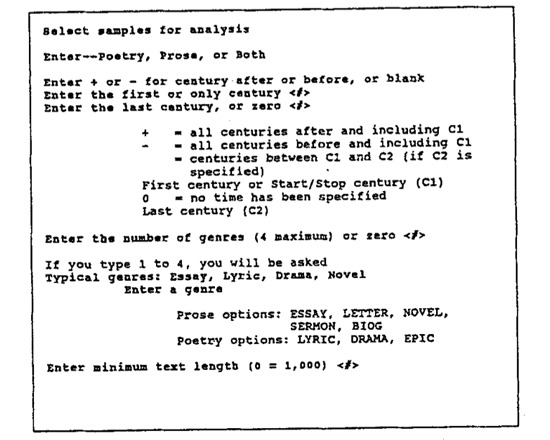
Micro-EYEBALL is a microprocessor version of the English language parser developed in the 1970s. This historically important legacy tool could also provide statistical descriptions of many linguistic features of a text. This tool is no longer available, and does not have a web presence.

Rated 0.0 out of 5.

Natural Language Processing

MITRE Syntactic Analysis Procedure

The MITRE Syntactic Analysis Procedure was a program developed in the 1960s for analyzing English phrase structures.

Rated 0.0 out of 5.

Natural Language Processing

MONK (Metadata Offer New Knowledge)

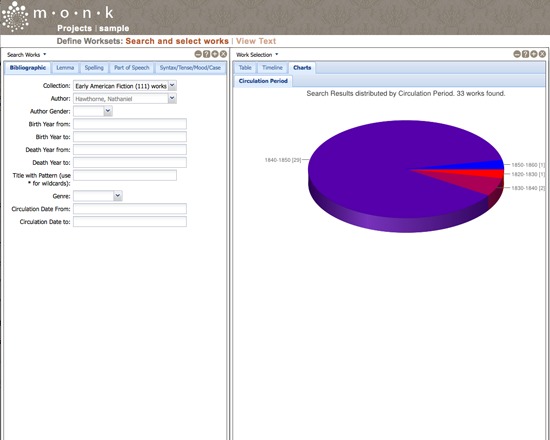
MONK (Metadata Offer New Knowledge) is a digital environment for humanities scholars. It is desgined to assist with the discovery and analysis of patterns within texts, incorporating full text content from corpora such as ECCO, EEBO and Early American Fiction directly into the tool. The MONK Workbench is the primary environment, permitting users to create worksets, perform analytics and save their results. In addition, the MONK workbench can be used in conjunction with the Flameco faceted browser and Zotero.

Rated 0.0 out of 5.

›

Curated lists

Curated list created by experience authors in the fields.

All curated lists

Geoffrey Rockwell

Cool Voyant Tools

Not all Voyant tools show up in the default view or skin. Here is a list of some of the other tools worth trying.

4 tools

View list

Holly Pickering

Audio Production Software

Interested in audio production and editing? Here are a few programs that can help you get on your way. Some of them are free, some not, but all are helpful and useful.

3 tools

View list

Jason Bradshaw

TATR: Text Analysis for Twitter Research

This list compiles a suite of tools that make up Kynan Ly's Text Analysis for Twitter Research (TATR) Library. Recipes to these notebooks can be found on methodi.ca

6 tools

View list

The catalogue

  • 1321

    Tools catalogued

  • 15

    Curated lists

  • 22

    Analysis types

  • 671

    Community reviews

More is coming

Researchers, power users, and students will soon be able to contribute tools, share reviews, and curate lists around their own work.