Skip to content
TAPoR Text Analysis Portal for Research

For researchers who work with text

Find a text analysis tool that fits the work.

TAPoR catalogues concordancers, annotators, topic models, stylometry packages, and visualization environments. Every record notes the platform, the license, and what the tool is actually good for.

  • Platform, license, and method on every record
  • Reviews from people who teach with the tools
  • Lists assembled around a course or a corpus

Browse tools

Filter by the type of analysis.

View all tools
‹

Visualization

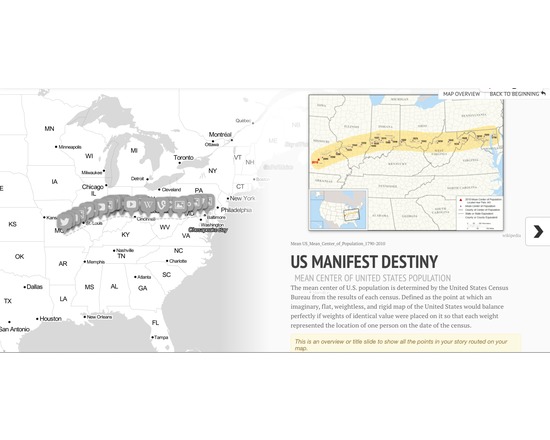
StoryMapJS

StoryMapJS is a project by KnightLab which aims to help journalists and historians tell stories by using maps using a straight-forward and simple authoring tool. It is constructed around a framework of highlighting the locations of a series of events. As an editing tool, it is relatively intuitive and easy to use.

Rated 0.0 out of 5.

Publishing

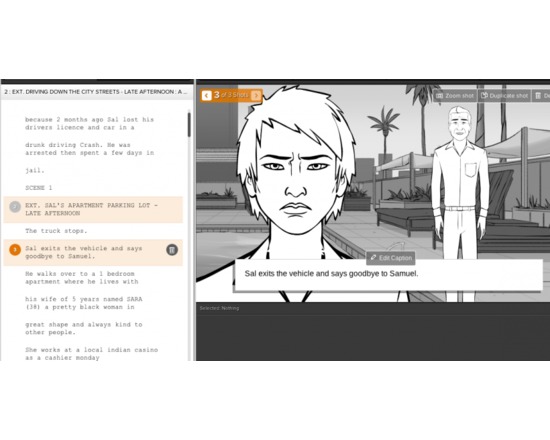
Storyteller

Storyteller was an environment builded by Amazon to give creators the ability to easily visualize a script as a storyboard or animatic video. As of 25th September 2015, it is no longer available.

Rated 0.0 out of 5.

Analysis

STRAP 2.0

STRAP 2.0 (Structural Analysis Programs) was a package of interrelated programs for analyzing tagged texts. It was intended to index, conduct contextual searches and generate distribution diagrams for literary texts. It could also recognize punctuation marks, generate word counts, and accommodate alphabets for multiple languages.

Rated 0.0 out of 5.

Analysis

stylo

The ‘Stylo’ package provides easy-to-use implementations of various established analyses in the field of computational stylistics, including non-traditional authorship attribution, genre recognition, style development (“stylochronometry”), etc. The package includes a number of explanatory methods provided by the function stylo() (multidimensional scaling, principal component analysis, cluster analysis, bootstrap consensus trees). Addtionally, a number of supervised machine-learning methods are available via the function classify() (Delta, support vector machines, naive Bayes, k-nearest neighbors, nearest shrunken centroids). The rolling.delta() function analyses collaborative works and tries to determine the authorship of fragments extracted from them. The oppose() function performs a contrastive analysis between two given sets of texts: among other things, it generates lists of words significantly preferred and avoided by one or more authors in comparison to the texts by another author (or a set of them). (from: "Stylo: a package for stylometric analyses" by Eder/Kestemont/Rybicki)

Rated 0.0 out of 5.

Substance

Substance is a fully web-based document authoring and publishing platform.

Rated 0.0 out of 5.

Search

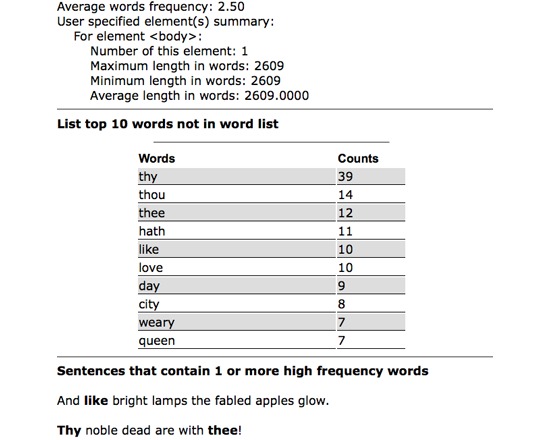
Summarizer - HTML (TAPoRware)

This tool creates a summary of statistical information on a given document, and enables the user to select what types of information to display in the summary. The options include high frequency words, sentences with high frequency words, high frequency word context, collocation and element/text distribution. XML and plain text versions are also available within the TAPoRware toolsets. This tool’s functionality has been incorporated into Voyant available online at www.voyant-tools.org.

Rated 0.0 out of 5.

›

Curated lists

Curated list created by experience authors in the fields.

All curated lists

Geoffrey Rockwell

Cool Voyant Tools

Not all Voyant tools show up in the default view or skin. Here is a list of some of the other tools worth trying.

4 tools

View list

Holly Pickering

Audio Production Software

Interested in audio production and editing? Here are a few programs that can help you get on your way. Some of them are free, some not, but all are helpful and useful.

3 tools

View list

Jason Bradshaw

TATR: Text Analysis for Twitter Research

This list compiles a suite of tools that make up Kynan Ly's Text Analysis for Twitter Research (TATR) Library. Recipes to these notebooks can be found on methodi.ca

6 tools

View list

The catalogue

  • 1321

    Tools catalogued

  • 15

    Curated lists

  • 22

    Analysis types

  • 671

    Community reviews

More is coming

Researchers, power users, and students will soon be able to contribute tools, share reviews, and curate lists around their own work.