Skip to content
TAPoR Text Analysis Portal for Research

Tools

Sort by Name ↓ Rating Date

Visualization

DH Press

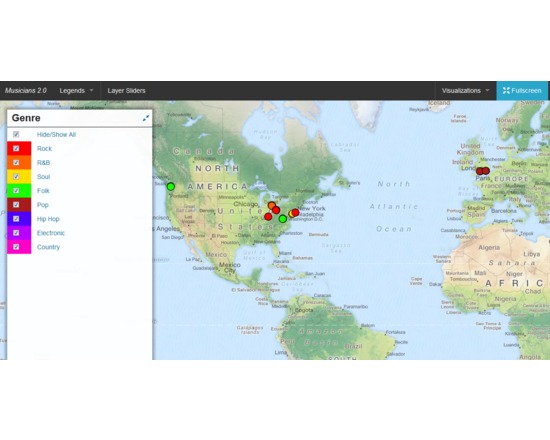
DH Press (originally called diPH) is a toolkit conceived as an easy-to-use WordPress plugin which allows potentially every kind of user to visualise and mashup historic and geographic information, documents and various types of multimedia content to develop digital humanities project. The user cannot start from the toolkit itself, as the first step to set up a project, when the toolkit is already installed, is a CSV import. This means that the raw information has to be processed first, through any software like Microsoft Excel or Google Spreadsheet, following some conventions dictated by the toolkit, and once completed must be exported in CSV format. The file can then be imported into DH Press. At this point, the user finally has full control over the data. First, the toolkit needs to be informed of what kind of data is in each column, as it can handle various types, such as Short Text, Long Text, Lat/Lon, Date, and Link. The steepest learning curve resides here, in the data management part, as the database must be set up very carefully, and fixing any problem later is complex. This does not mean that new users cannot approach the tool, but some basic research on data management is required to make correct use of it. After setting up all this fields, called “motes” in the toolkit, a legend can be assigned to each of them, for example a field called “city” might contain, through multiple entries, ten different cities, and to each of those will correspond the colour chosen by the user. It is also possible to assign icons or png images instead of colours. A single control panel then allows the user to create, set up and manage multiple visualisations of different kind, and in each of them the user can choose which information to display and how. This part is the most useful and is really straightforward. The last section of the control panel lets the user set up custom fields for data and run a test of the whole project, and outputs detailed error information. Following the training page, http://dhpress.org/training/, it is possible to take advantage of a pre-existing database, which can be used to quickly set up a project, so that one can instantly work on the main control panel. There is a detailed google document that guides the user through the process step by step, and also offers an even more detailed annex. A couple of hours is enough to go through all of it and get the necessary information to use it correctly. Then, any view can be quickly set up and customised in any desired way. Overall, this toolkit is quite stable, reliable, user-friendly after the first entry barrier and gives you a varied set of tools to visualise and display a large amount of data in a neat, organised manner. For a more detailed and personal review, please read http://claudiasartori.com/2015/01/tool-review-dh-press/
Rated 0.0 out of 5.

Search

DfR Browser

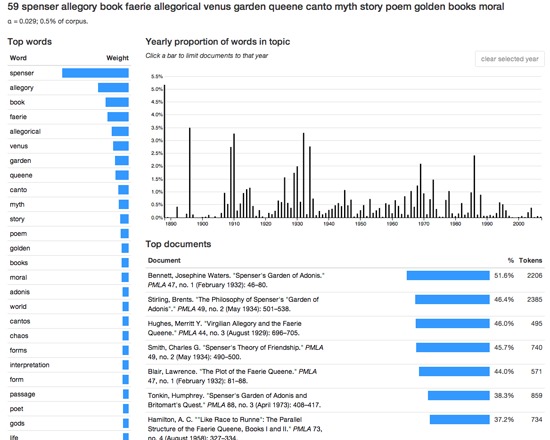
The DfR Browser is a free, open source visualization interface for exploring aggragates of articles from the JSTOR database. It uses topic modelling, co-occurrances and document metadata to provide multiple views on the corpus of interest based on topic searches, via several specialized views such as scaled, list and yearly subviews. Users can test the DfR browser via the provided web demo, which incudes a broad selection of pre-loaded topics, or download the source code to use the tool with their own data. The tool's output can be imported into Mallet for further analysis.

Rated 0.0 out of 5.

Collaboration

DEVONthink

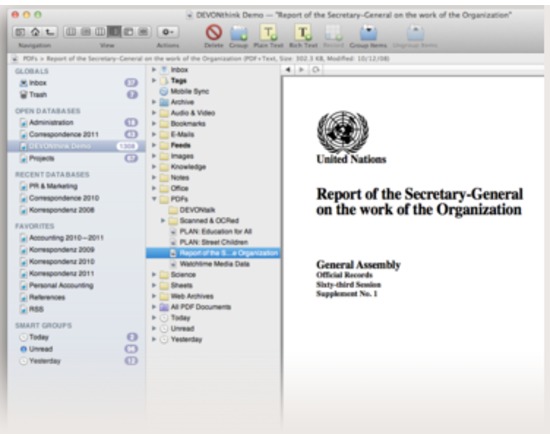
DEVONthink is a database that helps users organize, manage and collaborate on digital files, including Office files, links, e-mails, research data and PDFs.

Rated 0.0 out of 5.

Natural Language Processing

DériF (Dérivation en Français)

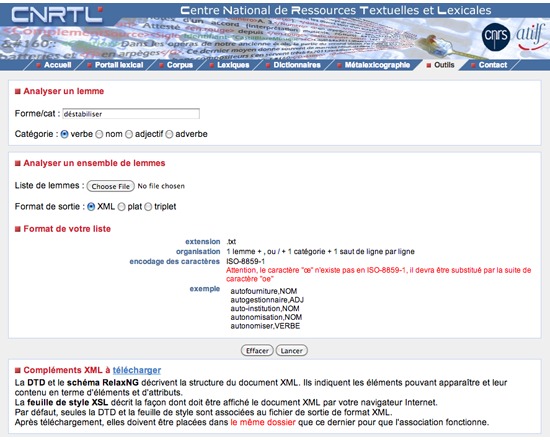
DériF (Dérivation en Français) is a free, web based morphological analyzer for French. It lemmatizes a text and labels each lemma, out of context, with a grammatical category (noun, verb, adjective, etc.).

Rated 0.0 out of 5.

Natural Language Processing

DEREDEC

DEREDEC was a programming system and workbench for linguistics and text analysis written in LISP in the 1980s. It enabled syntactic and texual parsing, and could link phrases by their contenxual dependency relations.

Rated 0.0 out of 5.

Creation

Denemo

Denemo is a music notation editor with a graphical user interface that allows users to enter notation for typesetting by the LilyPond music engraver.

Rated 0.0 out of 5.

Search

DeeperWeb

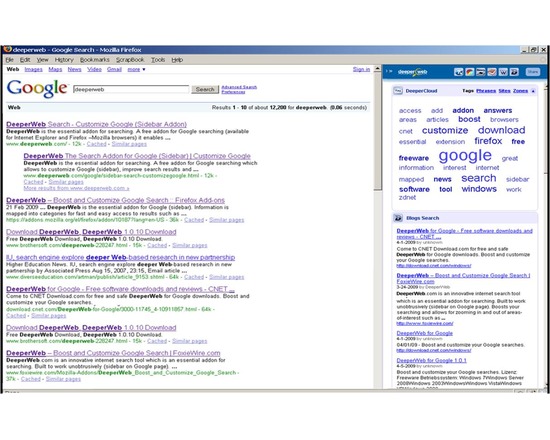
DeeperWeb was a browser add-on that adds a tag cloud to Google search results. It grouped and sorted the results obtained from google search for further exploration. It provides tags related to the search item and helps the user refine the search. As of 2016, it is no longer available.

Rated 0.0 out of 5.

Analysis

Dedoose

Dedoose is a cross-platform app for analyzing text, video, and spreadsheet data (analyzing qualitative, quantitative, and mixed methods research). Our intuitive software interface allows users or teams to effectively analyze qualitative and mixed methods research data from various research approaches when conducting surveys and interviews in market research, psychology research, social science research, ethnographic research, anthropology research and much more from anywhere in the world, simultaneously, always protected by our industry leading security for about $10 per month (only for months you login). You can even import from a MAXQDA, NVivo, SurveyMonkey, or Atlas.ti, or other projects! Free for one month with nothing to install and setup is instant!

Rated 0.0 out of 5.

Search

Date Finder - XML (TAPoRware)

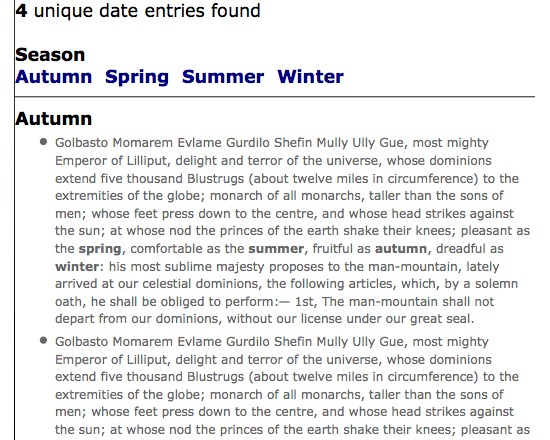
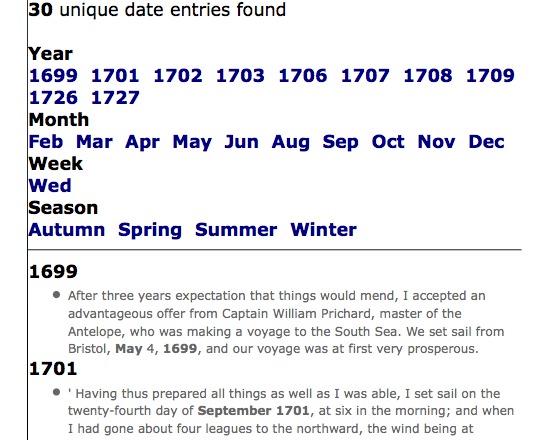
This tool extracts dates from an XML document from a choice of presets including all dates, years, months, weeks, seasons or North American holidays. Users can also choose to define dates, such as specific month(s), week(s), season(s) or holiday(s). Versions are also available for HTML and plain text within the TAPoRware toolsets.

Rated 0.0 out of 5.

Search

Date Finder - Plain Text (TAPoRware)

This tool extracts dates from a plain text document from a choice of presets including all dates, years, months, weeks, seasons or North American holidays. Users can also choose to define dates, such as specific month(s), week(s), season(s) or holiday(s). Versions are also available for HTML and XML within the TAPoRware toolsets.

Rated 0.0 out of 5.