Durationator
The Durationator is a web-based tool which seeks to make the past usable one query at a time by providing legal information regarding the copyright term of any given cultural work.
The Durationator is a web-based tool which seeks to make the past usable one query at a time by providing legal information regarding the copyright term of any given cultural work.
Analysis
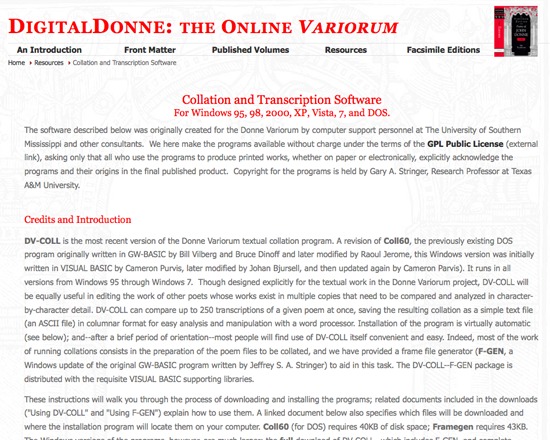
DV-COLL (Donne Variorum Textual Collation Program) is a historically important textual collation program first introduced in the 1980s and maintained into the present. It was originally designed to assist in creating a digitized corpus of the works of John Donne, and has been opened to other researchers for collecting, comparing and analyzing the works of other poets.
Visualization
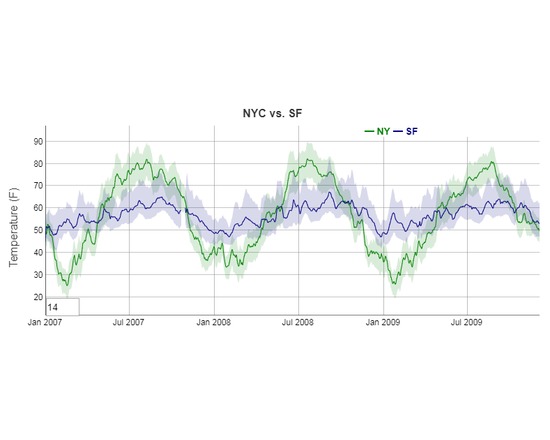
dygraphs is a fast, flexible open source JavaScript charting library. Features: -Handles huge data sets: dygraphs plots millions of points without getting bogged down. Interactive out of the box: zoom, pan and mouseover are on by default. - Strong support for error bars / confidence intervals. - Highly customizable: using options and custom callbacks, you can make dygraphs do almost anything. - dygraphs is works in all recent browsers. You can even pinch to zoom on mobile/tablet devices! - There's an active community developing and supporting dygraphs.
Visualization
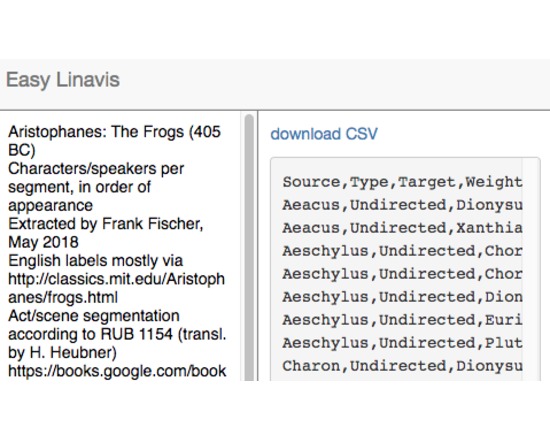
Easy Linavis (ezlinavis) generates CSV files with network data from simple segmentations of literary texts that you can further visualise and analyse with Gephi or other tools. It provides more than 20 example files to make it easier to start.
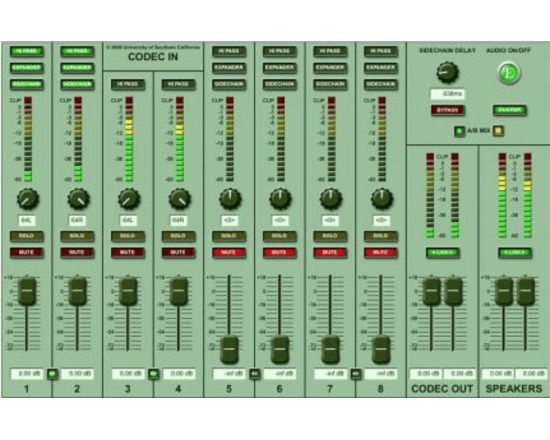
ECHODamp is a multi-channel audio mixer and echo controller designed primarily for the High-Bandwidth Musical Video-teleconference environment and is meant for audio-engineers and musicians to share high quality audio in video-teleconferencing.
With ediarum researchers can comfortably transcribe, encode and edit manuscripts in TEI-XML, as well as publish their results in an online or print edition. The solution, developed by TELOTA, is based on three software components: exist-db, Oxygen XML Author, and ConTeXt. These are combined, supplemented with additional functions, and tailored to fit a project's needs.
Collaboration
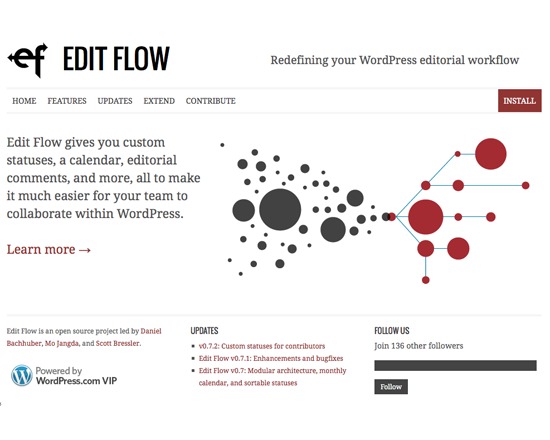
Edit Flow is a free, open source WordPress plugin designed for editorial collaboration. It includes a private discussion environment, metadata management and workflow tools.
Collaboration
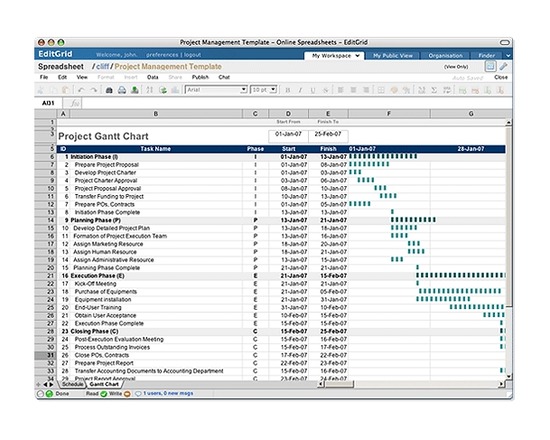
online spreadsheets, collaborative editing, connected to data sources. This online service is no longer available. The beta release was in the year 2006, and the first non-beta release was in 2007 as a subscription service
Collaboration
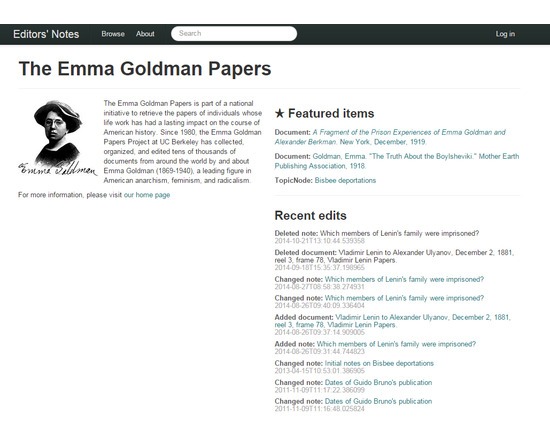
Editors' Notes is an open-source, web-based tool for recording, organizing, preserving, and opening access to research notes, built with the needs of documentary editing projects, archives, and library special collections in mind. Projects that work closely with documents—researching, contextualizing, and ordering them—invariably produce massive amounts of thorough research notes which are too often locked away in filing cabinets or the minds of editors and curators, never to be seen by anyone. The Editors' Notes project is a collaboration between the editors of the Stanton-Anthony Papers, the Emma Goldman Papers, the Margaret Sanger Papers, and the Labadie Collection which aims to preserve those research notes in a way that makes them useful to future scholars and interested minds. Research teams can use Editors' Notes to manage their research and note-taking. Project administrators can assign research tasks to other team members, and they can control who has permission to edit their project's notes. Notes can be organized around documentary sources or thematically around topics (or both). Users can browse by topic, search full text, and filter using bibliographic metadata. Documents can be annotated with bibliographic metadata, topic keywords, and textual notations. Researchers can also upload scanned images of documents into the zoomable interface. Researchers can annotate specific passages in document transcripts. Annotations, like other notes, can include bibliographic metadata and topic keywords and are fully searchable. In addition to creating annotated transcripts, researchers can upload scanned images of documents, which can be viewed in a zoomable interface. New accounts are by invitation only. Request an invitation. Editors' Notes is currently in limited beta release (Nov 10/14)
Publishing
Edublogs is an educational blogging service for teachers and students to create, manage, and publish on their own WordPress sites. Provides cloud hosting and a simplified interface, as well as additional account options at the university level.