OpenRefine (formerly Google Refine) is a free, open-source tool for working with messy data. It enables users to clean data, transform it between a variety of formats, extend it with web services, and link it to databases. This tool is available for Windows, Mac and Linux.
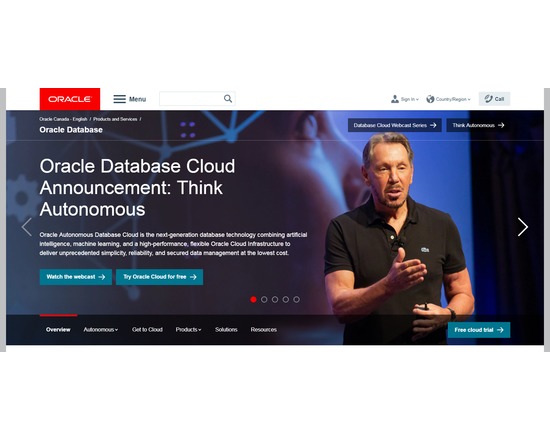
Oracle Database is a powerful and extensive relational database management system (RDBMS). There are restrictions on the free version of the software. Features: Supports symmetric multiprocessing (SMP) Stores data logically in the form of tablespaces and physically in the form of datafiles Transportable tablespaces Advanced Queuing (AQ) 64-bit database Data Mining Option
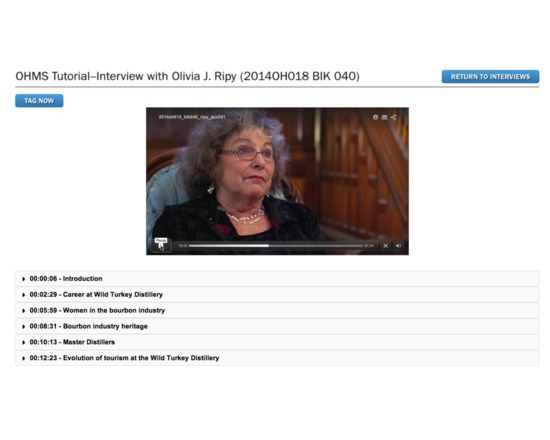
OHMS (Oral History Metadata Synchronizer) inexpensively and efficiently enhances access to oral history by providing users with word-level search capability and a time-correlated transcript or indexed interview connecting the textual search term to the corresponding moment in the recorded interview online. OHMS is an open source, web-based application designed to improve the user experience you provide for oral history, no matter what CMS or repository you use. There are 2 main components of the OHMS system OHMS Application: The OHMS application is where the work is done. This is the back-end, web-based application where interviews are imported, and metadata is created. In the OHMS application transcripts are time-coded and/or interviews are indexed. Upon completion, the interview record (including the synchronized transcript and/or time-coded index) are exported as an XML file. When located on a web server, the OHMS XML file is what interfaces with your content management system through the OHMS Viewer. OHMS Viewer: The OHMS viewer is the user interface of ohms. When an interview is called by the repository, the OHMS viewer loads, calling select interview level metadata and the intra interview level metadata created in the OHMS Application from the corresponding xml file.
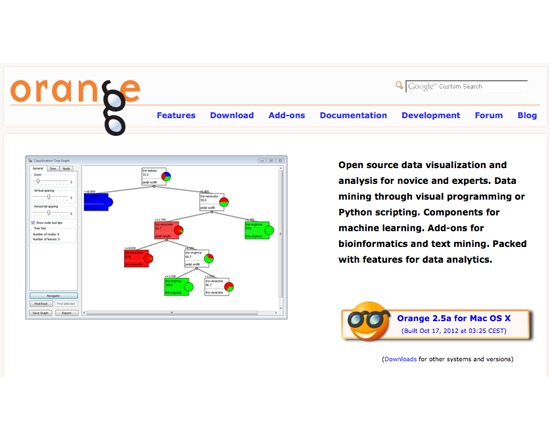
Orange is a free, open source data visualization and analysis tool. It allows users to conduct data mining either through its visual programming language, or via Python scripts, and includes components for machine learning. Orange includes both add-ons for biometrics and text mining, and data analytic features.
Rated 0.0 out of 5.★★★★★0.0
ORBIS: Stanford Geospatial Network Model of the Roman World
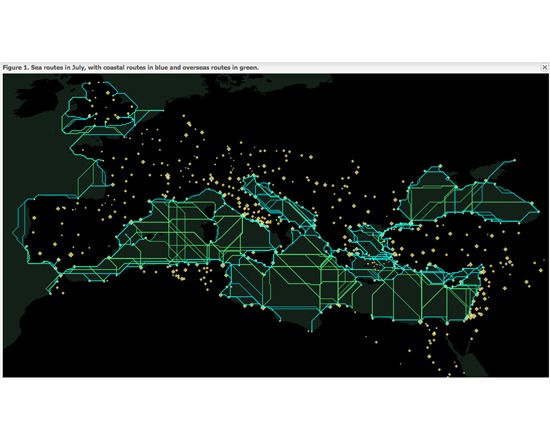
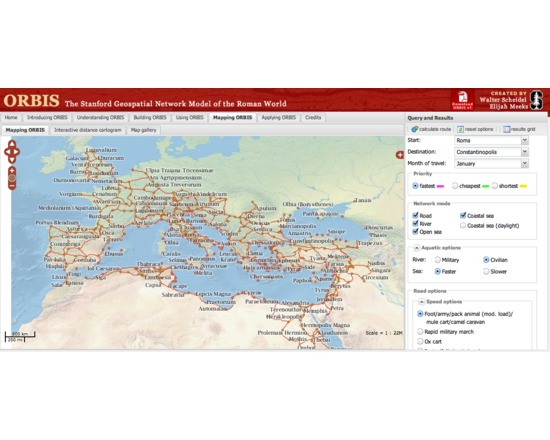
ORBIS: Stanford Geospatial Network Model of the Roman World is a tool and academic resource for reconstructing the time and financial costs of travel in the ancient world. Its model is based on a simplified network of Roman cities, roads, rivers and sea lanes, and takes into account such factors as time of year and method of travel. Users can enter parameters to generate models and interactive maps.
Rated 0.0 out of 5.★★★★★0.0
ORBIS: The Stanford Geospatial Network Model of the Roman World
ORBIS is an "interactive scholarly work" that allows a user to determine the cost, time, and distance of various land, sea, and river routes among hundreds of sites in the ancient world, at various times of day and in various seasons. The work can be (and has been) used as a tool to study questions in various fields of study about antiquity, including trade and social interaction.
Org mode is for keeping notes, maintaining TODO lists, doing project planning, and authoring with a fast and effective plain-text system. Org is not a standalone application but is a plugin in GNUEmacs and is now available in some Emacs distributions. As an Emacs plug in it is a linemode text based note manager rather than a gui tool
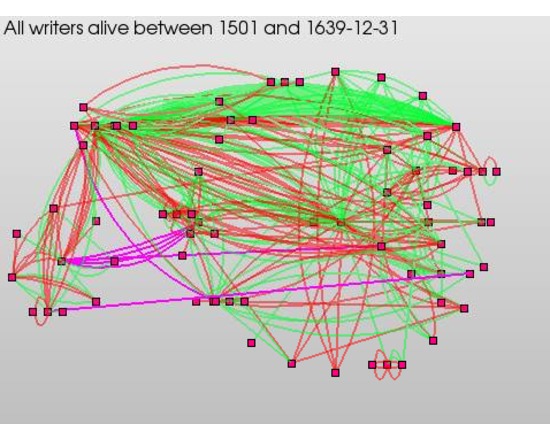
Breadboard is an application that allows one to easily find and view authors, with a compact representation of their connections to other authors, places, literary references, organizations and miscellaneous.
Orlando contains a relatively large corpus, currently consisting of details about the life and writing careers of roughly 1000 British women writers, amounting to 6.8 million words with 2.2 million semantic tags for everything from paragraphs to politics, plots, or relations with publishers.
An application for visualizing a specific collection of authors, and the links or associations between them. Links are determined by co-occurrence in the Orlando dataset. The current dataset consists of authors, other people associated with them, and the text entries upon which these associations are based. The application is designed in such a way that it could be extended to use other datasets as well. The display can be customized in the several ways. Node colours, shapes and sizes can be altered. More significantly, the layout of the graph can be chosen from amongst several different algorithms. As the collection is quite large, there are many filtering options available. In terms of author, the following categories can be specified: gender, author/non-author, and author nationality. The user can create complex search queries of the authors and the text, and specify a date restriction for the authors' life span. Each association in the text has been tagged with one or more semantic attributes, i.e. the type or meaning of the relation between the people. These tags have been organized into a tree, moving from general to more specific relations. Each tag in the tree can be checked/unchecked, further filtering the results. Finally, a data set and customizations can be saved as a session which can then be loaded at a later time. In addition, screenshots of the current layout can be saved to an image file.