Skip to content
TAPoR Text Analysis Portal for Research

For researchers who work with text

Find a text analysis tool that fits the work.

TAPoR catalogues concordancers, annotators, topic models, stylometry packages, and visualization environments. Every record notes the platform, the license, and what the tool is actually good for.

  • Platform, license, and method on every record
  • Reviews from people who teach with the tools
  • Lists assembled around a course or a corpus

Browse tools

Filter by the type of analysis.

View all tools
‹

Analysis

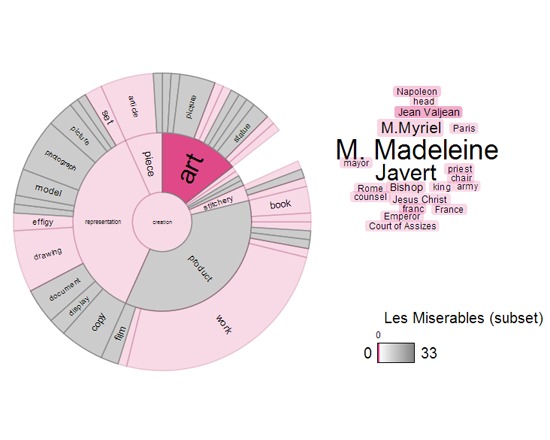
DocuBurst

DocuBurst is a free web-based visualization tool for exploring the contents of a text. Visitors can upload their own text or view those provided by others. DocuBurst presents an interactive chart called a ‘radial sunburst’ diagram which organizes the nouns extracted from the user-supplied text based on their meaning, and colours them based on frequency, revealing common themes in the text. The visualization also shows the proper nouns (e.g. character names) in a linked word cloud. The visualization may be zoomed, filtered, or refocused to target types of words of interest (e.g. “animal” words or “feeling” words). The visualization also provides a comparison tool to contrast word use across two documents. DocuBurst views can be bookmarked, annotated, shared, and embedded in your own website.
Rated 0.0 out of 5.

Analysis

DocuScope

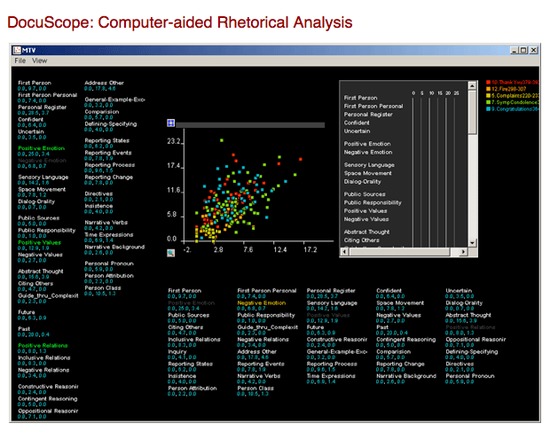
DocuScope is a text analysis environment first developed in 1998. It contains a suite of interactive visualization tools for corpus-based rhetorical analysis. At present, DocuScope is not available outside the originating research group. However, the Working Group for Digital Inquiry at the University of Wisconsin-Madison is currently working on a working environment that includes much of DocuScope's functions.

Rated 0.0 out of 5.

Analysis

Dundas

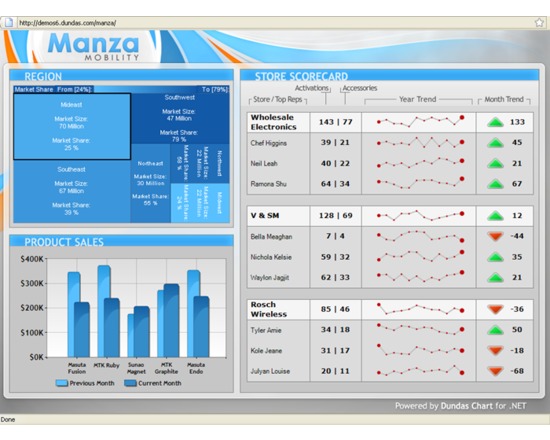
Software for creating data dashboards. Many of the sample galleries portray corporate financial data.

Rated 0.0 out of 5.

Analysis

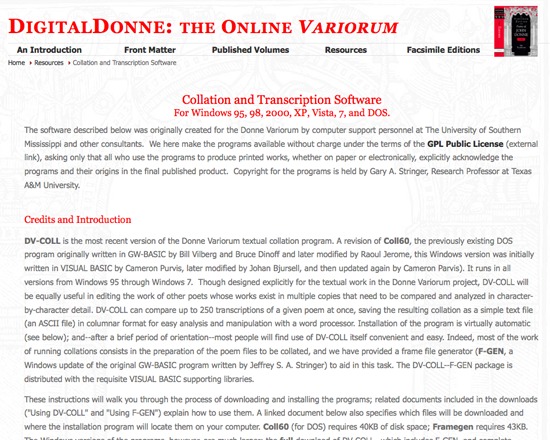
DV-COLL (Donne Variorum Textual Collation Program)

DV-COLL (Donne Variorum Textual Collation Program) is a historically important textual collation program first introduced in the 1980s and maintained into the present. It was originally designed to assist in creating a digitized corpus of the works of John Donne, and has been opened to other researchers for collecting, comparing and analyzing the works of other poets.

Rated 0.0 out of 5.

Analysis

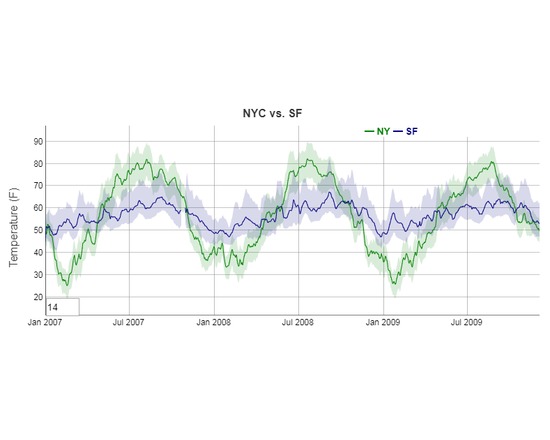
Dygraphs

dygraphs is a fast, flexible open source JavaScript charting library. Features: -Handles huge data sets: dygraphs plots millions of points without getting bogged down. Interactive out of the box: zoom, pan and mouseover are on by default. - Strong support for error bars / confidence intervals. - Highly customizable: using options and custom callbacks, you can make dygraphs do almost anything. - dygraphs is works in all recent browsers. You can even pinch to zoom on mobile/tablet devices! - There's an active community developing and supporting dygraphs.

Rated 0.0 out of 5.

Analysis

ELSE

ELSE was a historically important tool developed to assist the instruction of French and Danish with sophisticated error analysis.

Rated 0.0 out of 5.

›

Curated lists

Curated list created by experience authors in the fields.

All curated lists

Geoffrey Rockwell

Cool Voyant Tools

Not all Voyant tools show up in the default view or skin. Here is a list of some of the other tools worth trying.

4 tools

View list

Holly Pickering

Audio Production Software

Interested in audio production and editing? Here are a few programs that can help you get on your way. Some of them are free, some not, but all are helpful and useful.

3 tools

View list

Jason Bradshaw

TATR: Text Analysis for Twitter Research

This list compiles a suite of tools that make up Kynan Ly's Text Analysis for Twitter Research (TATR) Library. Recipes to these notebooks can be found on methodi.ca

6 tools

View list

The catalogue

  • 1321

    Tools catalogued

  • 15

    Curated lists

  • 22

    Analysis types

  • 671

    Community reviews

More is coming

Researchers, power users, and students will soon be able to contribute tools, share reviews, and curate lists around their own work.