Skip to content
TAPoR Text Analysis Portal for Research

For researchers who work with text

Find a text analysis tool that fits the work.

TAPoR catalogues concordancers, annotators, topic models, stylometry packages, and visualization environments. Every record notes the platform, the license, and what the tool is actually good for.

  • Platform, license, and method on every record
  • Reviews from people who teach with the tools
  • Lists assembled around a course or a corpus

Browse tools

Filter by the type of analysis.

View all tools
‹

Analysis

Open Calais Issue Discovery

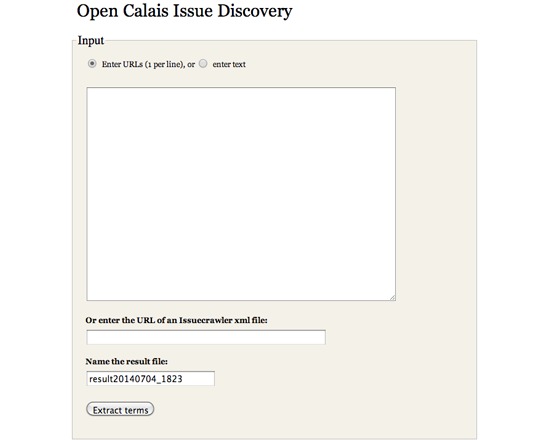
Open Calais Issue Discovery is a free, open source tool for textual analysis. From a text file, URLs or an Issuecrawler XML file, it generates a ranked table of terms and an overall count corresponding to the most relevant words and phrases in the source text or issue network.
Rated 0.0 out of 5.

Analysis

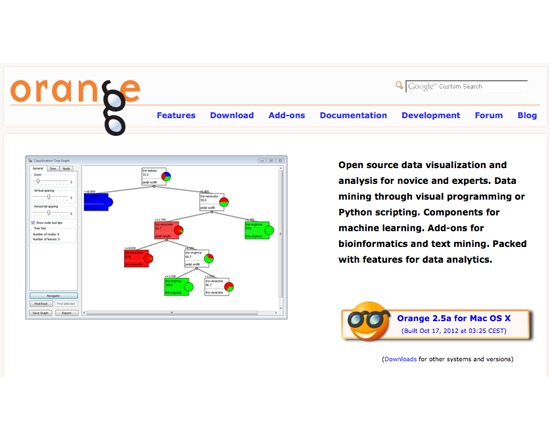
Orange

Orange is a free, open source data visualization and analysis tool. It allows users to conduct data mining either through its visual programming language, or via Python scripts, and includes components for machine learning. Orange includes both add-ons for biometrics and text mining, and data analytic features.

Rated 0.0 out of 5.

Analysis

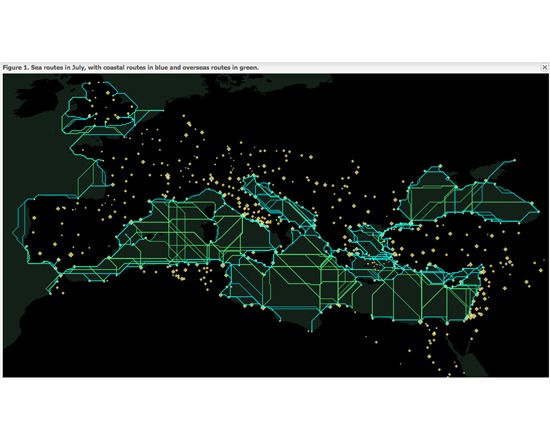
ORBIS: Stanford Geospatial Network Model of the Roman World

ORBIS: Stanford Geospatial Network Model of the Roman World is a tool and academic resource for reconstructing the time and financial costs of travel in the ancient world. Its model is based on a simplified network of Roman cities, roads, rivers and sea lanes, and takes into account such factors as time of year and method of travel. Users can enter parameters to generate models and interactive maps.

Rated 0.0 out of 5.

Analysis

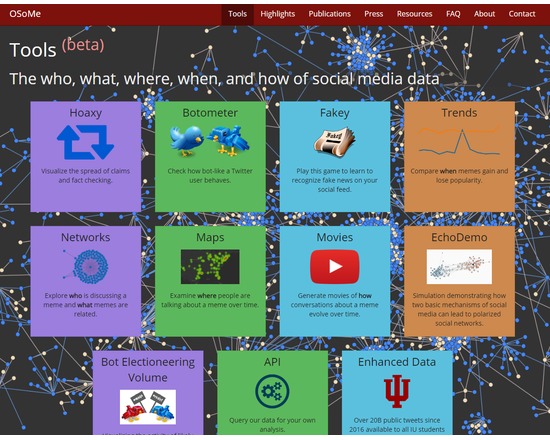
OSoMe

OSoMe (awe•some) is a joint project of the Indiana University Network Science Institute (IUNI) and the Center for Complex Networks and Systems Research (CNetS), aimed to study information diffusion in social media. Here we highlight findings, publications, and resources. Use our tools to explore how ideas spread through online social networks. Hoaxy: Visualize the spread of claims and fact checking. Botometer: Check how bot-like a Twitter user behaves. Fakey: PLay this game to learn to recognize fake news on your social feed. Trends: Compare when memes gain and lose popularity. Networks: Explore who is discussing a meme and what memes are related. Maps: Examine where people are talking about a meme over time. Movies: Generate movies of how conversations about a meme evolve over time. EchoDemo: Simulation demonstrating how two basic mechanisms of social media can lead to polarized social networks. Bot Electioneering Volume: Visualizing the activity of likely bots on Twitter around the 2018 US midterm elections. As well as API and Enhanced Data available.

Rated 0.0 out of 5.

Analysis

Overview

Overview is a free, web-based tool for document mining. Developed by and for journalists, Overview is also broadly applicable to other corpus-based research applications. Aside from providing advanced search features such as regular expressions and fuzzy matching, Overview automatically sorts documents according to topic and provides a fast visualization and reading interface. You can apply tags to search results, individual documents, or entire topics to track what you've found, then export the entire document set with its tags to perform further processing or create visualization. It’s been used for qualitative research, social media conversation analysis, legal document review, digital humanities, and more. Overview can be run via the web interface (max 200 000 documents) or downloaded and installed. The system can import documents in PDF or CSV format and currently supports analysis in 9 languages. The code is open source and there is a plugin API to extend Overview's analysis and visualization capability.

Rated 0.0 out of 5.

Analysis

Oxford Concordance Program (OCP)

The Oxford Concordance Program (OCP) was a major and influential early concordance program developed in the late 1970s and early 1980s at the Oxford University Computing Service. It was influnced by CLOC and COCOA, and aimed to be more user-friendly than its predecessors.

Rated 0.0 out of 5.

›

Curated lists

Curated list created by experience authors in the fields.

All curated lists

Geoffrey Rockwell

Cool Voyant Tools

Not all Voyant tools show up in the default view or skin. Here is a list of some of the other tools worth trying.

4 tools

View list

Holly Pickering

Audio Production Software

Interested in audio production and editing? Here are a few programs that can help you get on your way. Some of them are free, some not, but all are helpful and useful.

3 tools

View list

Jason Bradshaw

TATR: Text Analysis for Twitter Research

This list compiles a suite of tools that make up Kynan Ly's Text Analysis for Twitter Research (TATR) Library. Recipes to these notebooks can be found on methodi.ca

6 tools

View list

The catalogue

  • 1321

    Tools catalogued

  • 15

    Curated lists

  • 22

    Analysis types

  • 671

    Community reviews

More is coming

Researchers, power users, and students will soon be able to contribute tools, share reviews, and curate lists around their own work.